Videos

New research papers show productivity gains and gaps

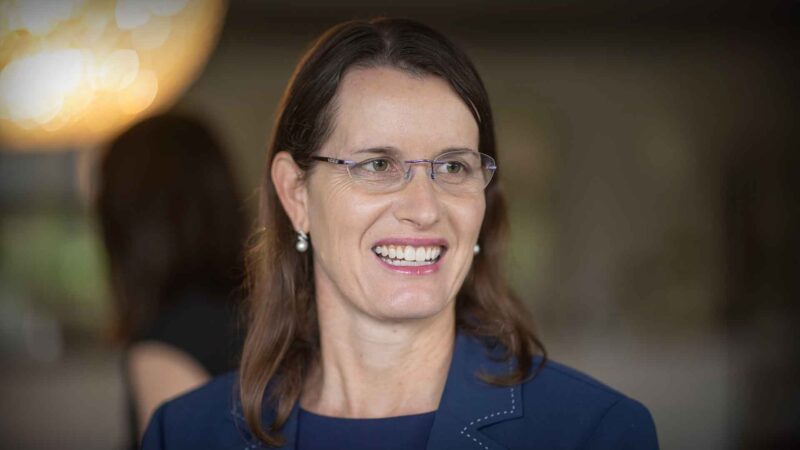
Commissioner Catherine De Fontenay talks about the Productivity Commission’s new approach to analysing health productivity, shifting the perspective from the unit measurement of individuals using the health system to the actual improvement of health. This has shown Australia’s health treatment productivity is improving, but identifies gaps in preventative health measures and duplication, where digital technology needs to be more effectively used.

Health and economic burden of interstitial lung diseases

Dr Cox’s main research interests focus on respiratory diseases and primarily on the economic burden and economic evaluation of interventions and treatments for their management. She earned her PhD from the University of Tasmania where her doctoral research examined the health and economic burden of idiopathic pulmonary fibrosis (IPF) in Australia, one component of the NHMRC Centre for Research Excellence for Pulmonary Fibrosis, a national project implemented alongside the Australian IPF Registry and the Lung Foundation Australia. This research provided the first epidemiological profile and first costing estimates of the economic burden of the disease in Australia, providing essential evidence for health service reimbursement policies.

Benefits of prehabilitation ahead of surgery

Dr Matthew Wallen PhD, AES, AEP is a Senior Research Fellow in Cancer Survivorship, the Deputy Lead of the Cancer Survivorship Program, and a Senior Lecturer in Exercise Science and Clinical Exercise Physiology within the College of Nursing and Health Sciences at Flinders University, in South Australia. His clinical interest focuses on improving outcomes for people requiring major surgery, specifically (1) lifestyle interventions, including exercise, nutritional, and psychological support to improve the health and wellbeing of people prior to surgery, termed ‘prehabilitation’, (2) novel physical function assessments aimed at identifying people at risk of treatment-related complications, and (3) implementation of new models of care in cancer.

Inaugural vaccine value chain conference talks about Team Australia

For the first time, key decision-makers and thought leaders from government, industry, academia, NGOs, and representatives from the immunisation community converged in a 2 day conference in Sydney hosted by Biointelect, highlighting the transformative potential of collaborative innovation.

Exercise therapy for metabolic dysfunction-associated steatotic liver disease

Dr Shelley Keating is a Senior Lecturer in Clinical Exercise Physiology and Accredited Exercise Physiologist from the School of Human Movement and Nutrition Sciences at the University of Queensland. With a strong grounding in exercise metabolism and body composition, Dr Keating’s research centres on the utility of exercise as a therapy for obesity and related cardiometabolic conditions, notably metabolic dysfunction-associated steatotic liver disease (MASLD).

Impact of genetic pathologist role across medicine

Dr Marina Berbic is a genetic pathologist and the Deputy Director of Genetics at Douglass Hanly Moir Pathology – a laboratory based in Sydney and part of Sonic Healthcare. The genetics department at Douglass Hanly Moir offers a wider array of genetic tests across many domains, and the medical leadership model ensures the highest possible standard of care and commitment to patient safety.

State of Private Hospitals sector in Australia

During Mr Roff’s working career at APHA he has represented the private hospitals sector to nine different Federal Health Ministers and eight Prime Ministers. He believes the government should take steps to regulate the health insurance industry to protect consumers and ensure that Australians have access to affordable and comprehensive healthcare services.

Allied Health Building Leadership Experience in Tasmania

A notable program run by Hospitals South is the ABLE program, or Allied Health Building Leadership Experience. This program was created to address the challenge of allied health professionals being seen as a single entity, rather than as individual disciplines, when it comes to leadership and management opportunities. The program is delivered entirely internally, with seminars presented by senior staff and mentorship opportunities for participants to become more effective representatives of allied health in meetings and working groups.

How I Became an Emergency Physician

Dr Kim Hansen was initially attracted to emergency medicine because of its dynamic and chaotic environment. She enjoyed organising the chaos of the emergency department and working with a variety of patients, from newborn babies to centenarians. Dr Hansen found it fulfilling to help people get better or provide them with assistance and guidance when they couldn’t be cured. The unpredictability of the work was also part of the appeal, and she dedicated herself to developing the skills required to be a good emergency doctor.

Australasian College of Paramedicine makes case for multi-disciplinary care

Despite being seen primarily as emergency responders, paramedics have long been providing care in the primary care space. As such, their increased involvement in primary and urgent care is a natural progression that can lead to improved health outcomes for communities. Urgent care clinics, which treat non-life-threatening injuries and illnesses, have been a recent introduction. However, when these clinics were initially proposed, paramedics were left out of the opportunity, despite being experts in urgent, acute, unplanned, and unscheduled care. They work in these types of situations every day in the ambulance service and should be utilised in these clinics to improve patient outcomes. Working as part of multidisciplinary teams with doctors and nurses can further enhance the outcomes for local communities.

Scroll to top