
 https://orcid.org/0000-0003-2527-5417
-
Neuroscience, neuropharmacology and exercise science
Dr Jacob Thorstensen is an early-career Assistant Professor in Neuroscience and Physiology in the Faculty of Health Sciences & Medicine at Bond University. He is also an honorary research fellow in The School of Biomedical Sciences at The University of Queensland. His work has unveiled several new neuroscientific mechanisms which have future applications for movement disorders.
-
CASE STUDY Next Generation Condom Contraception
Eudaemon Technologies, an early-stage medtech company with a focus on sexual reproductive health, is developing a hydrogel condom to address the need for a better feeling, next generation condom, with the potential to improve user experience and address issues with traditional latex condoms.
“Over 1 million STI’s being diagnosed every day and up to 120 million unplanned pregnancies every year result in a $60 billion health burden across the globe”, says Co-Founder and Executive Director of Operations, Dr Simon Cook.
Formed in 2018, the company focuses on developing tough hydrogels as an alternative to address issues with odour, colour, and taste commonly associated with latex condoms. This technology can be loaded with small molecule drugs for flavours or anti-STI compounds, and was developed in response to a grant from the Bill and Melinda Gates Foundation to address unplanned pregnancies and STIs.
-
Lymphoma, Myeloma and Genomics
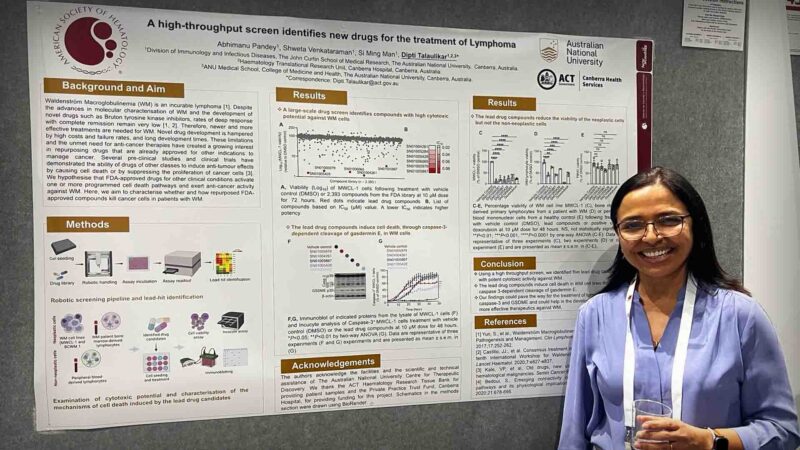
Professor Dipti Talaulikar is a clinical and laboratory haematologist with expertise in genomics, working at Canberra Health Services, and Professor at ANU. She has a clinical and research interest in lymphoma, myeloma and genomics, and has authored close to 100 peer reviewed papers, including several clinical guidelines that have had a significant impact on clinical practice.
Post Views: 722
Liver cancer & patient-derived tumour organoids

Recent Segments
- Drug delivery of targeted therapies for pancreatic cancer, motor neurone disease
- Physiotherapist-led care for musculoskeletal conditions in the emergency department
- RESEARCH IMPACT: 32 years of understanding, diagnosing, treating & preventing the onset of heart disease
- Research Australia Awards celebrate researchers in life-changing science and discovery
- Connecting Students with Careers in MedTech