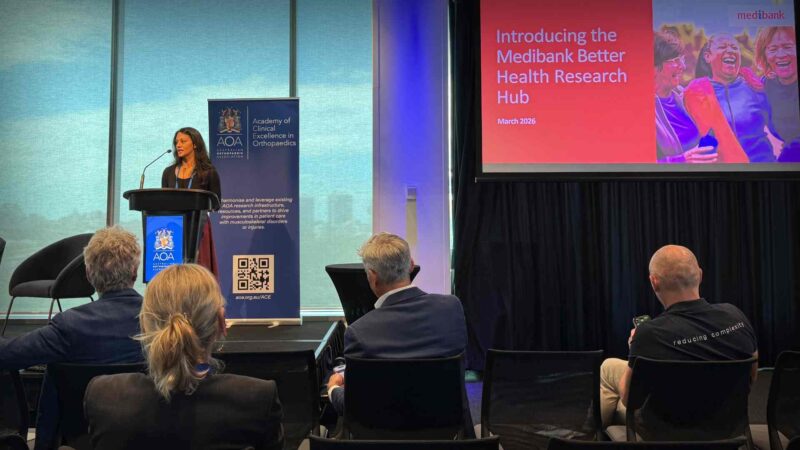
Dr Clare Ramsden is the Executive Director of Allied Health at Hospitals South in the Tasmanian Health Service. Her role encompasses both operational and professional leadership responsibilities, working alongside the Executive Director of Medical Services and the Executive Director of Nursing and Midwifery to ensure high quality professional standards across the workforce.
Allied Health Services at Hospitals South covers ten disciplines, including occupational therapy, physiotherapy, social work, podiatry, psychology, nutrition, dietetics, speech pathology, audiology, orthotics, prosthetics, and chaplaincy. These disciplines report operationally to the Executive Director of Allied Health, providing services across the full spectrum of care provided at Hospitals South, from emergency department care to outpatient and community-based services.
One notable program run by Hospitals South is the ABLE program, or Allied Health Building Leadership Experience. This program was created to address the challenge of allied health professionals being seen as a single entity, rather than as individual disciplines, when it comes to leadership and management opportunities. The program is delivered entirely internally, with seminars presented by senior staff and mentorship opportunities for participants to become more effective representatives of allied health in meetings and working groups.
Allied Health Services at Hospitals South is known for its dynamic workplace culture, which emphasises collaboration, creativity, and enthusiasm for providing high-quality care to the community. While productivity is important, there is no single measure that works for all of the different disciplines involved in Allied Health Services. The focus is on delivering efficient, appropriate, and high-quality care in a collaborative model that includes nursing and medicine as well.
According to Dr Ramsden, Hospitals South provides an opportunity to gain a breadth of experience for new graduates, which they might not get in larger hospitals. The hospital offers allied health representation roles, mentoring roles, and leadership roles. With almost 20 years of experience in allied health, Dr Clare Ramsden has been able to work in different countries, engage in research, and gauge quality improvement. She believes that allied health provides a broad career for people interested in any aspect of health service provision. Hospitals South strives to offer opportunities for allied health services to staff, enabling them to make the most of their interests, whether in clinical leadership, management and formal leadership, education and training, workforce development, or quality improvement.
You Might also like
-
Awareness campaigns and HCP Toolkits for thyroid health
In 2021, the Australian Thyroid Foundation released analysis to show, well over 1 million Australian are living with an undiagnosed thyroid disorder, including thyroid cancer, lower IQs, lifelong disability, and a causal or possible contributory factor – in the development of other neurological disorders such as ADHD and autism. Some of the challenges for diagnosis and treatment can be addressed by producing material for health care practitioners during patient presentations.
‘Recent statistics show well over 1 million Australians are living with an undiagnosed thyroid disorder, awareness and testing can prevent unwarranted outcomes for mothers and their babies’ says ATF CEO Beverley Garside OAM
The Australian Thyroid Foundation has lodged a Pre-Budget Submission for the Federal Budget 2024-25 to counter increasing misinformation on social media creating dietary deficiencies such as an increasing number of young women, who are planning pregnancy or already pregnant opting for plant based milks such almond, soy or oat milk coffee as an alternative to standard cow’s milk, which is a source of iodine and alternate milks do not include.
-
Study reveals socioeconomic barriers to children’s healthcare access
Research published in the Australian Journal of General Practice (AJGP) has revealed mental health and developmental–behavioural issues such as ADHD are the most common paediatric referrals in metropolitan general practices.
But the research also revealed children at higher risk are less likely to get the care they may need.
-
Mission to raise awareness of sarcoma and need for clinical trial funding
Sarcoma, a rare and aggressive cancer, remains the deadliest cancer for children and young adults, accounting for nearly one third (30%) of cancer-related deaths among those aged 15–24 and one tenth (10%) of those aged 0–14. Further, still severely under-diagnosed, sarcoma only accounts for one sixth (15%) of all cancer diagnoses in the 15 – 24 age group, and less than a tenth (8%) among children under 10.