ROCK-INDUCED EARLY-ONSET BOWEL CANCER PROGRESSION
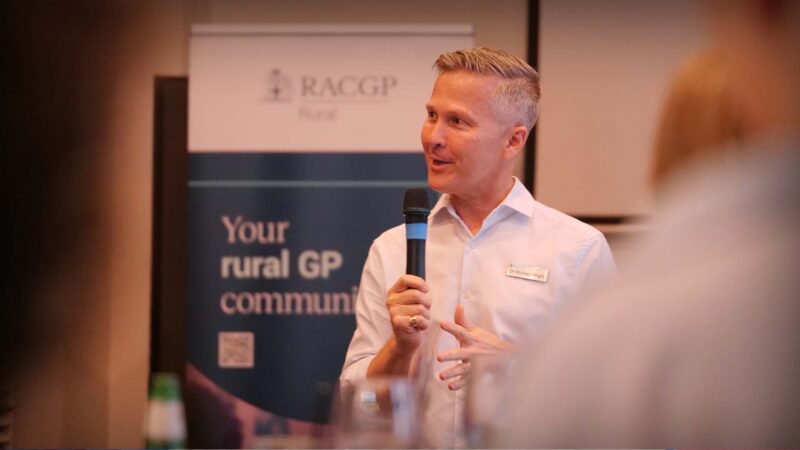
Professor Michael Samuel
Head, Tumour Microenvironment Laboratory
Centre for Cancer Biology
SA Pathology and University of South Australia &
Principal Investigator at the Cancer Mechanotherapies Laboratory,
Basil Hetzel Institute for Translational Health Research
Adelaide, South Australia, Australia
RESEARCHER PROFILE
Filmed in Adelaide, South Australia | January 2025
Michael Samuel is a cell biologist whose research interest is in understanding how cancer mechanobiology influences the tumour microenvironment, thereby promoting tumour progression. He is Professor of Matrix Biology at the University of South Australia, Adelaide and heads the Tumour Microenvironment Laboratory at the Centre for Cancer Biology and the Cancer Mechanotherapies Laboratory at the Basil Hetzel Institute for Translational Health Research.
He obtained his Ph.D. from the University of Melbourne in 2004, working with Prof. Matthias Ernst at the Ludwig Institute. He then joined the laboratory of Prof. Mike Olson at the Beatson Institute for Cancer Research, Glasgow, with whom he identified the role of the Rho-ROCK signalling pathway in regulating tumour-promoting mechanical properties of the dermal extracellular matrix. He returned to Australia in 2012 to join the Centre for Cancer Biology as a Laboratory Head.
Discoveries from his laboratory include a role for the ER-stress protein CRELD2 in the recruitment and education of cancer-associated fibroblasts and the roles of Rho-ROCK signalling in the tumour immune microenvironment. He has been awarded an Australian Research Council Future Fellowship, an Emerging Leader Award by the Australia and New Zealand Society for Cell and Developmental Biology (2020), the Barry Preston Award for leadership in the field, by the Matrix Biology Society of Australia and New Zealand (2021) and the Australian Breast Cancer Fellowship by The Hospital Research Foundation (2023).
In April 2024, Bowel Cancer Australia announced a team led by Professor Michael Samuel as the successful applicant for a three-year AUD$600k early-onset bowel cancer research project through the 2023 round of Cancer Australia’s Priority-driven Collaborative Cancer Research Scheme (PdCCRS).
Professor Samuel of the Centre for Cancer Biology (an alliance between the University of South Australia and SA Pathology) and the Basil Hetzel Institute for Translational Health Research are investigating ROCK-induced early-onset bowel cancer progression.
His team will also be examining whether proteins that interact with ROCK cause early-onset bowel cancer progression, and if they do, targeting these proteins would be a way of stopping ROCK from accelerating tumour growth.
You Might also like
-
Infections and other lung diseases using models of human lung tissue grown from stem cells
Dr Rhiannon Werder is a Team Leader at Murdoch Children’s Research Institute leading a multidisciplinary team, combining expertise in stem cell biology and immunology, to develop new therapies for lung diseases. Her research centres around induced pluripotent stem cells to investigate respiratory diseases, spanning acute respiratory infections to chronic lung diseases. Using stem cells, Dr Werder’s team creates models of human lung tissue. With these models, Dr Werder is investigating how human-specific pathogens infect different regions of the lung, the ensuing immune responses, and how the lung repairs itself after infections, especially in people with preexisting lung diseases.
-
Superslayer taking on antibiotic-resistant bacteria
Dr Katharina Richter is a visionary leader in MedTech, acclaimed for innovation and gender diversity. With over 40 awards to her name, including MIT Innovator Under 35 Asia-Pacific, and Prime Minister’s Prize for New Innovator finalist, she has shattered barriers as an entrepreneur, scientist, and ‘superbug slayer.’ Katharina’s groundbreaking work in combating antibiotic-resistant bacteria has resulted in 6 innovative treatments, 3 of which are patented, offering hope against deadly infections.
-
Elite athlete physical and mental health impact performance
Understanding the interaction between genes and lifestyle factors in response to stress can lead to potential therapeutic interventions for stress-related disorders. This research is crucial for promoting health and well-being.
Professor Divya Mehta works as a Principal Research Fellow at the Stress Genomics Laboratory, in Queensland University of Technology in Australia, specialising in stress genomics and mental health. Her education started in the UK with undergraduate and Masters, followed by her PhD in Germany. 11 years ago Professor Mehta moved to Australia.