-
Clinical Research in Emergency Medicine
Professor Daniel Fatovich is a senior emergency physician and clinical researcher at Royal Perth Hospital Emergency Department (ED), with over 30 years’ experience in the design and conduct of clinical research in Emergency Medicine. He is also Head of the Centre for Clinical Research in Emergency Medicine (CCREM) within the Harry Perkins Institute of Medical Research.
-
CASE STUDY: Transforming surgical waitlist into a ‘preparation list’
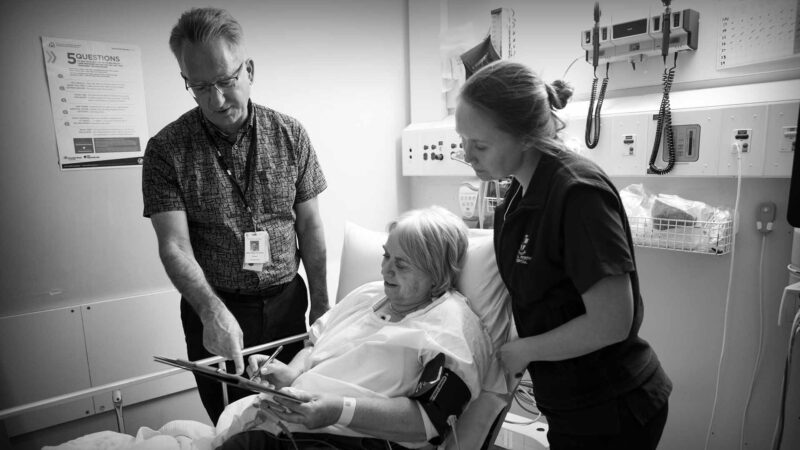
The DIAMONDS initiative aims to transform the surgical waitlist into a “preparation list,” enabling healthcare professionals to optimise patient care in the months leading up to elective surgery starting at pre-admission phase.
Patients are will be able to complete pre-admission forms online, receive timely updates, and access educational resources to ensure thorough preparation. This will allow staff to spend more time with patients.
-
Investigating new approaches to target plaque inflammation in atherosclerosis
Associate Professor Peter Psaltis is an Academic Interventional Cardiologist who holds Level 2 NHMRC Career Development and National Heart Foundation Future Leader Fellowships. He has Faculty positions within the University of Adelaide, Central Adelaide Local Health Network (CALHN) and South Australian Health and Medical Research Institute (SAHMRI). Within SAHMRI, he is the Co-Theme Leader of the Lifelong Health, Program Leader of Heart and Vascular Health and Co-director of the Vascular Research Centre in the Lifelong Health Theme.