ANTIMICROBIAL TECHNOLOGIES & DRUG DELIVERY PLATFORMS
With
Associate Professor Aaron Elbourne, RMIT University, Melbourne, Australia
RESEARCHER PROFILE
Filmed in Melbourne, Australia | January 2026
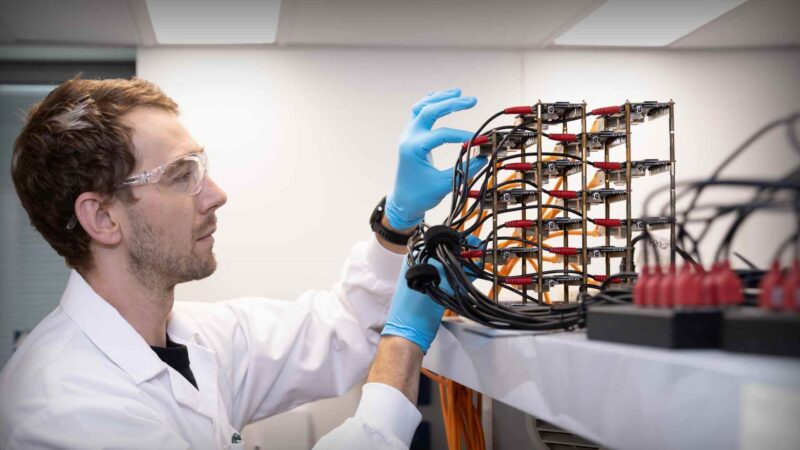
Dr Aaron Elbourne is an ARC DECRA Fellow, Jack Brockhoff ECR Fellow, and Associate Professor within the School of Science at STEM Hub. A leader in nanomaterials, soft matter science, and interface research, Aaron’s work addresses critical challenges in health and the environment.
Since becoming an independent researcher, Aaron has held continuous funding from prestigious funders, including the Australian Research Council (ARC) and the National Health and Medical Research Council (NHMRC). His research is characterised by its interdisciplinary approach, combining chemistry, materials science, and engineering. His pioneering contributions to colloid therapeutics and soft matter science have driven advancements in diagnostic tools, antimicrobial technologies, and therapeutic delivery systems. His expertise in studying nanomaterial interactions with synthetic and biological membranes has been instrumental in translating scientific discoveries into impactful applications.
Aaron is a dedicated mentor to early-career researchers (ECRs) and students, having supervised and trained numerous postgraduate and doctoral candidates. He has played a key role in securing funding for student training initiatives, including joint PhD scholarships and National Industry PhD programs, which emphasise collaboration between academia and industry.
With a strong focus on translational research, Aaron’s work bridges the gap between fundamental science and practical applications. His leadership in creating innovative technologies, fostering academic-industry partnerships, and empowering future researchers underscores his commitment to advancing science and creating a meaningful impact.
Source: Supplied
You Might also like
-
Stem cells used for age-related macular degeneration
Dr. Jenna Hall is a passionate and accomplished biologist with expertise in induced pluripotent stem cell (iPSC) culture, disease modelling, and high-throughput automated systems. She recently earned her PhD from the University of Melbourne, where her research focused on using iPSC-derived retinal pigment epithelium (RPE) cells to study age-related macular degeneration. Dr Hall’s technical skillset spans manual and automated cell reprogramming and differentiation, quantitative microscopy-based phenotyping, and large scale -omics analysis.
-
Using Gut Microbes to Reduce Blood Pressure
Professor Francine Marques is an National Health and Medical Research Council Emerging Leader, Viertel Charitable Foundation, and National Heart Foundation Fellow.
She leads the Hypertension Research Laboratory at Monash University and has published more than 120 peer-reviewed papers in journals such as Nature Reviews Cardiology, Nature Medicine, Nature Cardiovascular Research, and Circulation.
-
Blister management and impact on firefighters
David Burns, a Senior Paramedic with LifeAid, a private paramedicine company in Victoria and, has a diverse background in healthcare. He began his career as a registered nurse, progressing to critical care nursing specialising in liver transplants and cardiovascular surgery.
At the Australasian College of Paramedicine International Conference, David presented research focused on the foot care of firefighters during prolonged bushfire campaigns. During the 2019-2020 bushfires, over 10,000 firefighters sought care, with nearly 50% requiring attention for foot-related issues. David emphasised that inadequate foot care could bench firefighters for up to 10 days, diminishing their ability to protect communities and critical infrastructure. Recognising the economic benefits of prioritising firefighter health, David advocates that ensuring their well-being allows communities to recover effectively and enhances safety for all involved in firefighting efforts.
https://orcid.org/0000-0002-8562-7325