BETTER BIOMARKERS FOR PREDICTING THE INCIDENCE OF HAVING ATHEROSCLEROSIS AND HEART ATTACKS
With
Associate Professor Christina Bursill
Co-Director, Vascular Research Centre,
South Australian Health and Medical Research Institute (SAHMRI) &
Department of Health and Medical Science,
The University of Adelaide, Australia
RESEARCHER PROFILE
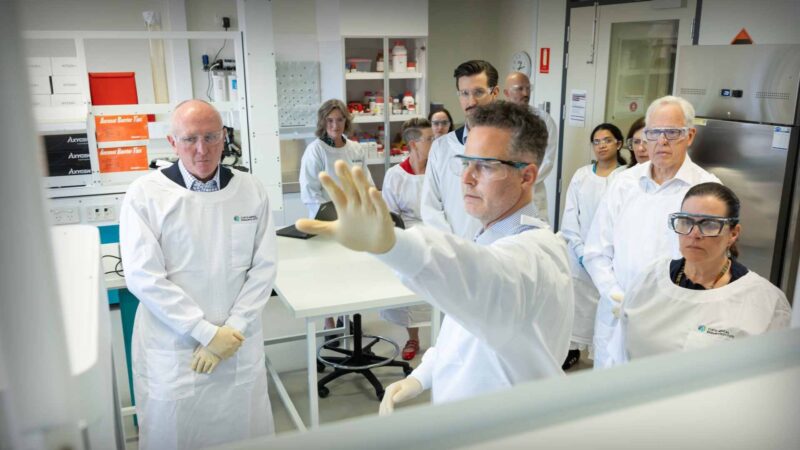
Filmed in Adelaide, Australia | April 2025
Associate Professor Christina Bursill started as Co-director of the Vascular Research Centre in January 2017 at the South Australian Health and Medical Research Institute (SAHMRI) and at The University of Adelaide, Department of Health and Medical Science. She currently holds the Lin Huddleston National Heart Foundation fellowship and is a Chief Investigator on the ARC Centre of Excellence for Nanoscale Biophotonics (CNBP).
Assoc Prof Bursill is a vascular biologist with interests and expertise in vascular inflammation, atherosclerosis and angiogenesis. She completed her PhD at The University of Adelaide in lipid metabolism then headed to Oxford University for five years to undergo a postdoctoral post in the Departments of Cardiovascular Medicine and Pathology. Her postdoctoral time triggered her interest in the mechanisms that cause atherosclerosis and in particular the role of small inflammatory proteins called chemokines.
Assoc Prof Bursill returned to Australia in 2007 at the Heart Research Institute (HRI) in Sydney where she led the Immunobiology Group. In 2008, she was awarded a National Heart Foundation Career Development Fellowship. At the HRI A/Prof Bursill developed an interest in high-density lipoproteins (HDL) and through NHMRC and National Heart Foundation funding, investigated novel mechanisms of their action in models of stent biocompatibility, diabetes and wound healing. She also has an interest in using viral gene transfer techniques to over-express proteins that attenuate chemokine activity to suppress atherosclerosis and inflammatory-driven diseases. A/Prof Bursill currently holds NHMRC Ideas, Heart Foundation Vanguard and Diabetes Australia Millenium grant funding.
Recently, Christina has been focusing on finding ways to reduce atherosclerotic heart disease.
Source: Supplied
You Might also like
-
Funding the best brains to beat brain cancer
The Charlie Teo Foundation is dedicated to funding and advancing research into brain cancer, with a particular focus on developing more effective treatments and finding a cure for this devastating disease.
Since its inception, the foundation has committed nearly $15 million to brain cancer research, funding notable projects in Australia and the United States. These projects explore innovative approaches to understand and treat brain cancer more effectively, with a focus on translating findings from animal studies to human applications. Charlie’s dedication to finding solutions for this devastating disease remains unwavering as he travels frequently to collaborate with global researchers. -
Professor Kim Hemsley
RESEARCH IN BRAIN COMPUTER INTERFACE
@ SYNCHRON
MELBOURNE, VICTORIA, AUSTRALIA -
Next-generation NK cell-based immunotherapies for hard-to-treat cancers
Associate Professor Fernando Guimaraes is an internationally recognised leader in cancer immunotherapy and natural killer (NK) cell biology. Based at The University of Queensland, he leads innovative research focused on developing next-generation NK cell-based immunotherapies for hard-to-treat cancers, including sarcomas and neuroblastoma.
https://orcid.org/0000-0002-0682-8760