
-
Empowering underprivileged communities with sustainable health
Dr Gaj Panagoda, CEO of Xstitch Health, has a diverse medical background and is working to improve health systems for underprivileged communities. In the Australian Health Journal’s People In Health Care series, he talks about the changes needed in community-based care using a project based approach,
According to Dr Panagoda, there is a need for a shift towards community-based care and collaboration with stakeholders in the healthcare system, and the potential to create a new kind of socially conscious, inspired, community-informed medical specialist is the future of medical specialty care.
-
Victorian social prescribing program underway
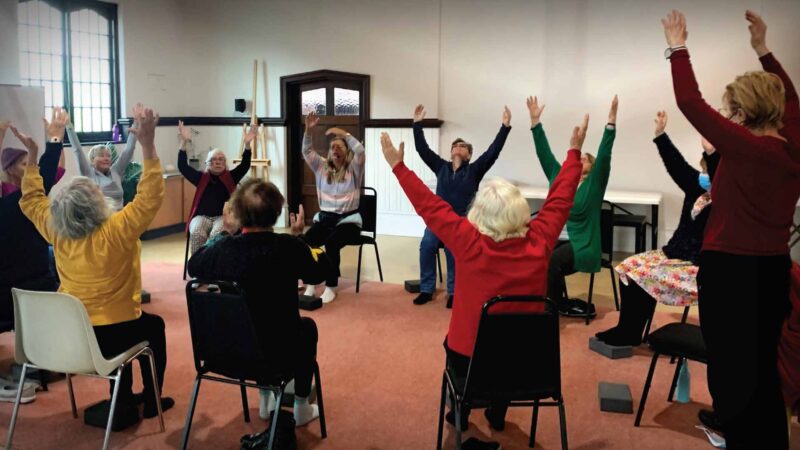
n Part 2 of the Models of Care on Social Prescribing, Australian Health Journal spoke to 4 people involved in the Connect Local program under the Connecting Communities to Care 4 year program. The free program for over 65’s promotes wellbeing through social connection and is underway in the Glen Eira community in Melbourne.
– Deidre McGill, Executive General Manager, At Home Support, Bolton Clarke
– Ann Van Leerdam, Connect Local Community Connector, Bolton Clarke
– Dr Rajna Ogrin, Senior Research Fellow, Bolton Clarke Research Institute, Bolton Clarke - Dr Daniel Fineberg, Deputy Director General Medicine, Alfred Hospital, Victoria -
Awareness, diagnosis and treatment of Congenital Hypothyroidism
Australian Health Journal spoke to Associate Professor MIchelle Jack about congenital hypothyroidism and newborn screening and her concerns in the varying thresholds for across different states in Australia. Despite the existence of newborn screening programs since the 1970s, there is still controversy surrounding the appropriate screening levels. Congenital hypothyroidism, affecting about one in 3500 infants, can lead to severe intellectual and physical impairment if not diagnosed early. The condition is mainly caused by the thyroid gland’s failure to develop properly, resulting in insufficient thyroid hormone production.
Post Views: 1,065
Occupational therapy creates profound impacts on client and patient lives


Recent Segments
- Clinical pain neuroscientist talks about how the brain processes pain information
- Therapy to prevent hepatocellular carcinoma in people with liver cirrhosis
- Identification & characterisation of molecular drivers of therapeutic resistance
- Liver cancer & patient-derived tumour organoids
- Developing upper limb motor biomarkers of dementia