PANCREATIC AND LUNG CANCERS DRIVEN BY MUTATIONS IN THE CANCER GENE KRAS
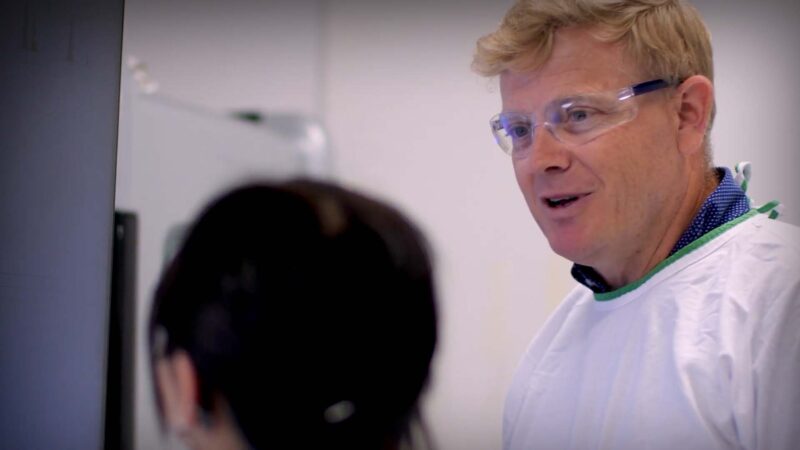
Dr Mara Zeissig, Group Head, T Cell Immunotherapy Laboratory
Tumour Inflammation and Immunotherapy Program
SAiGENCI – South Australian immunoGENomics Cancer Institute, Australia
RESEARCHER PROFILE
Filmed in Adelaide, Australia | December 2025
Dr Mara Zeissig is a recently appointed Lab Head within the Tumour Inflammation and Immunotherapy Program at the South Australian immunoGENomics Cancer Institute (SAiGENCI).
Her research focuses on studying immune evasion mechanisms in lung and pancreatic cancers to identify novel ways to increase response to immunotherapy. Her expertise is in genetically engineered mouse models of lung cancer, CRISPR-Cas9 screening technologies and T cell based immunotherapies (e.g Checkpoint inhibitors).
Dr Zeissig obtained her PhD at the University of Adelaide in 2020 with Prof Andrew Zannettino, where her research focused on the role of chemokine receptor CCR1 in the dissemination of the hematological malignancy multiple myeloma. She then undertook postdoctoral studies at Monash University with Prof Tony Tiganis, focusing on the role of protein tyrosine phosphotases PTPN2 and PTP1B on anti-tumour immunity in melanoma, breast, colon and liver cancers. In 2022 she joined the lab of Prof Kate Sutherland at WEHI. Here she conducted sophisticated CRISPR-Cas9 in vitro and in vivo screening to identify genetic determinants that influence response to KRAS inhibitors, and to identify novel immunotherapy targets in KRAS-mutant lung cancer. Her research has been published in high-impact journals including Science Advances (2022) and Cancer Discovery (2022). Dr Zeissig has been the recipient of numerous career awards and grants, including a Victorian Cancer Agency ECR Fellowship (2023-2026) and a Cure Cancer Research Grant (2023).
Immunotherapies such as CAR T cell therapy or Immune checkpoint inhibitors all harness the ability of cytotoxic T cells to recognise and kill tumour cells. However, approx. 80% of solid cancer patients do not respond to immunotherapy. This is due to both tumour intrinsic and extrinsic evasion mechanisms, the most crucial of these being 1) the immunosuppressive microenvironment that leads to T cell exhaustion and 2) loss of antigen and/or checkpoint ligand expression on tumour cells rendering the tumour unrecognisable by T cells. Importantly, there may be additional, undiscovered immune evasion mechanisms that could be exploited for immunotherapy.
Dr Zeissig’s lab is focused on understanding how cancers evade the immune system to identify new ways to enhance response to immunotherapy. In particular, her team work on lung and pancreatic cancers driven by mutations in the cancer gene KRAS. They utilise a range of tools including genetically engineered preclinical models of cancer, analysis of immune cell subsets, single-cell profiling and molecular biology techniques. They also harness large-scale genetic screening using CRISPR-Cas9 technology to find previously unknown targets and mechanisms that regulate response to immunotherapy.
Source: Supplied
You Might also like
-
Interventions for improving outcomes of children who are deaf or hard of hearing
Dr Rithin Nedumannil (MBBS, MPH, FRACP, FRCPA) is a PhD candidate at the University of Melbourne, undertaking his doctoral studies in collaboration with the Cambridge Stem Cell Institute (Cambridge, UK) and the Peter MacCallum Cancer Centre (Melbourne, Australia). He is a clinical haematologist and haematopathologist with current appointments at Peter MacCallum Cancer Centre, the Royal Melbourne Hospital, Austin Health and Northern Health.
-
Liver cancer & patient-derived tumour organoids
Dr Benjamin Dwyer is a translational cancer researcher driven by a clear purpose: to ensure discoveries made in the laboratory genuinely improve outcomes for patients.
Based at Curtin University, he established and now leads the organoid platform within the Liver Cancer Collaborative and directs the WA Organoid Innovation Hub, working at the intersection of biology, medicine and biotechnology to accelerate new treatments for liver cancer.
-
Liver cancer biomarkers, risk prediction & progression
Dr. Rodrigo Carlessi is an expert in Cancer Genomics and Molecular Biology, with an extensive track record in liver cancer research. He leads the Cancer Genomics Group within the Liver Disease and Regeneration Laboratory at the Curtin Medical Research Institute. He has an impressive publication record, with 43 manuscripts that have collectively garnered over 2,680 citations. His research leverages cutting-edge genomics and transcriptomics technologies, as well as long-read DNA sequencing, to explore mechanisms, identify biomarkers, and develop therapeutic targets in liver disease and cancer.
https://orcid.org/0000-0003-3264-6546