
-
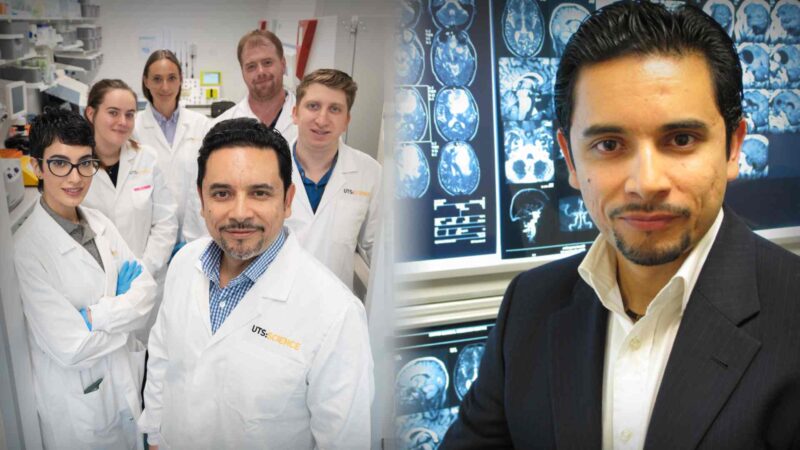
Using human skin hair follicles to treat Alzheimer’s disease
Professor Michael Valenzuela is a science opinion leader, innovator and creative thinker with a career-long commitment to the prevention and treatment of dementia.
Following that he completed graduate medicine and medical training at the Prince of Wales Hospital. In 2012, he established the Regenerative Neuroscience Group at the University of Sydney, and in 2017 became the university’s first Professor of Regenerative Medicine.
Professor Valenzuela’s group discovered a new cell type with potential for regenerative medicine, a rare neural precursor cell found deep within the human hair follicle. He is the main inventor on several related patents and is the Founder and Chief Scientific Officer of Skin2Neuron – a biotech company developing the first neurorestorative cell therapy for Alzheimer’s disease based on this work.
-
Early detection & surveillance guides for pancreatic cancer
Pancreatic cancer remains one of Australia’s deadliest cancers, with five-year survival rates hovering at just 14%, with little improvement over several decades. Often called the ‘silent killer’, the disease frequently presents with minimal or vague symptoms, resulting in late diagnoses and poor outcomes. Pancare Foundation is leading the rollout of new clinical resources and surveillance guides to support healthcare professionals in identifying at-risk patients and promoting early detection.
-
Landmark Australian-led study revises thresholds to diagnose and treat anaemia
In 2014, WEHI researchers began a study at the request of the World Health Organization (WHO), to formally review its global anaemia guidelines that were last updated in 1968.
Study lead and Acting WEHI Deputy Director, Professor Sant-Rayn Pasricha, speaking to Australian Health Journal said while anaemia can be diagnosed by measuring the amount of haemoglobin in the blood, there is currently no consensus on the thresholds that should be used to define the condition.
Post Views: 351
Observations in diagnosis and treatment of oral cancer over the past 45 years


Recent Segments
- Avoiding lung complications after surgery by reversing muscle relaxant drugs more effectively
- Applications of long-read sequencing in clinical genomics
- Alarming move away from plants based foods and reduced variety in diets
- Identifying biomarkers for immunotherapy using spatial biology
- Vascular cognitive impairment and dementia