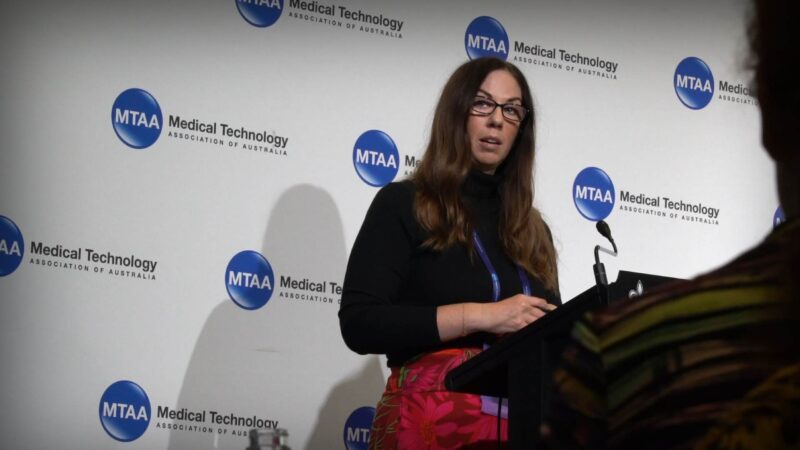
LIVED EXPERIENCE with COMPLEX REGIONAL PAIN SYNDROME (CRPS) Initial sporting injury leads to neurological pain: Implanted spinal cord stimulator restores quality of life
With
Lachlan Thorpe, Age 21
Diagnosed with CRPS following sporting injury
The Hon Courtney Houssos MLC, Minister for Finance,
Minister for Domestic Manufacturing and Government Procurement,
Minister for Natural Resources, NSW Parliament
LIVED EXPERIENCE SEGMENT
Filmed in Sydney | August 2026
Lachlan Thorpe has shared his experience of living with complex regional pain syndrome (CRPS), highlighting the profound impact the condition had on his life and the difference medical technology has made to his recovery.
In an interview with the Australian Health Journal, Thorpe explained that his CRPS developed following an ankle injury sustained while playing rugby for Sydney University Rugby Club in late 2024. After undergoing surgery and rehabilitation for the injury, he began experiencing severe pain, swelling and sensitivity despite there being no further orthopaedic damage.
The condition is relatively poorly understood and can cause ongoing pain without an obvious physical cause, meaning diagnosis of CRPS is challenging.
Thorpe described the experience as isolating, saying, “you can’t really see it when I’m wearing a shoe or anything”, while explaining how everyday activities became difficult.
After trying oral medications, infusions and injections without achieving lasting relief, Thorpe was referred to a pain management specialist and underwent a spinal cord stimulation trial. The trial produced immediate relief, allowing him to walk, wear shoes and swim again.
Following implantation of the spinal cord stimulator in March 2026, Thorpe was able to finish university, return to full-time work and resume many activities he had previously been unable to do.
Reflecting on the technology’s impact, he said, “Ultimately, this device has enabled me to take life back into my own hands.” While he cannot return to rugby or contact sports, Thorpe hopes sharing his story will raise awareness of CRPS and the potential of medical technology to transform lives.
Source: Adapted from transcript using AI
Media access credit: Medical Technology Association of Australia (MTAA), NSW MedTech Showcase Event, August 2026
You Might also like
-
Global GP Conference comes to Australia
Over 3000 delegates from around the World will gather at the 50th celebration of WONCA to reconnect and revive General Practice, sharing knowledge and learnings on access, equity, funding, and multidisciplinary care teams. This includes networking with Australian and overseas GPs and in particular learning about primary care practices in other countries.
Australian Health Journal met with Dr Nicole Higgins, President of RACGP in transit at Brisbane Airport recently and she spoke about the $6 Billion allocated in the Federal Budget in May as a significant achievement for General Practice investment. She also emphasised this announcement reinforced GPs should be at the centre of multidisciplinary care teams to ensure continuity of care and better health outcomes.
-
New treatment options under investigation for pelvic organ prolapse
Dr Shayanti Mukherjee, Research Group Head, Translational Tissue Engineering at the with her team at Hudson Institute of Medical Research is developing new ways to prevent and potential cure pelvic organ prolapse (POP). The technology aims to ultimately lead to safer and more effective treatment for women with pelvic organ prolapse (POP) using a woman’s own stem cells to boost the effectiveness of a degradable mesh.
-
LIVED EXPERIENCE: Spontaneous Coronary Artery Dissection (SCAD)
Jen O’Neill is a Social Work Program Manager and mother of two from the Central Coast, NSW.
At 36, she experienced her first spontaneous coronary artery dissection (SCAD) heart attack and has since survived two further SCADs before age 43.