Continuing the Australian Health Journal, Pioneers in Health Care series, Geriatrician Professor Susan Kurrle, Curran Professor in Health Care of Older People at the Faculty of Medicine and Health, University of Sydney AO spoke after receiving the Australian Healthcare and Hospitals Association 2022 Sidney Sax medal award.
The Sidney Sax medal is awarded for outstanding contributions to the development and improvement of Australia’s healthcare system.
Professor Kurrle is a practicing geriatrician for the Northern Sydney Local Health District (NSLHD), specialising in the areas of dementia, frailty, elder abuse, successful ageing, and intergenerational care. In addition to her work at NSLHD, Professor Kurrle is the expert geriatrician leading the work on the internationally award-winning ABC TV documentary series ‘Old People’s Home for 4 Year Olds’.
This series showcased the benefits that intergenerational care programs can have, and their ability to promote participation and social connectedness, increasing happiness, dignity, and self-esteem for all participants.
‘Professor Kurrle’s work on the many aspects of care for older people, is an area in need of champions who take a holistic approach to their health and well-being,’ says AHHA Board Chair, the Hon Jillian Skinner.
As a well-respected leader and expert driving the research agenda in dementia and aged care, Professor Kurrle has been co-designing services with general practice for several years.
‘The Geriatric Rapid Acute Care of the Elderly or GRACE program, co-designed by Professor Kurrle, is a ground-breaking approach to helping treat older patients in the appropriate setting, be it the home, or aged care settings, rather than in emergency departments.
This program was better not only for the patient, but for hospitals struggling to meet demand for services.’
The GRACE model has since been adopted by many other Local Health Districts, now more commonly known as ‘rapid-response teams’ and ‘geriatric flying squads’.
‘Her work across professional groups, and in using an inter-generational and educative approach, has been of great benefit to older people, their families and the Australian health system as a whole.’
Australian Health Journal spoke to Professor Kurrle about commencing her work initially on bringing elder abuse to public attention, in particular to health professionals. Through her work she has also advocated the use of hip protectors and managing falls and frailty. Her work today continues on tackling ageism and in successful ageing.
The 2022 Sidney Sax medal award presentation took place on the 26th of October 2022 at the National Portrait Gallery of Australia, Canberra.
You Might also like
-
Tasmanian researchers and clinicians working together
Tasmanian medical research charity funds projects that have a global impact and improve community health and well-being.
Australian Health Journal spoke to Stephanie Furler the Chief Executive Officer of The Royal Hobart Hospital Research Foundation about the impact of this research locally and in global health.
-
A clinical research career working Sponsor-side, CRO-side to Site-side
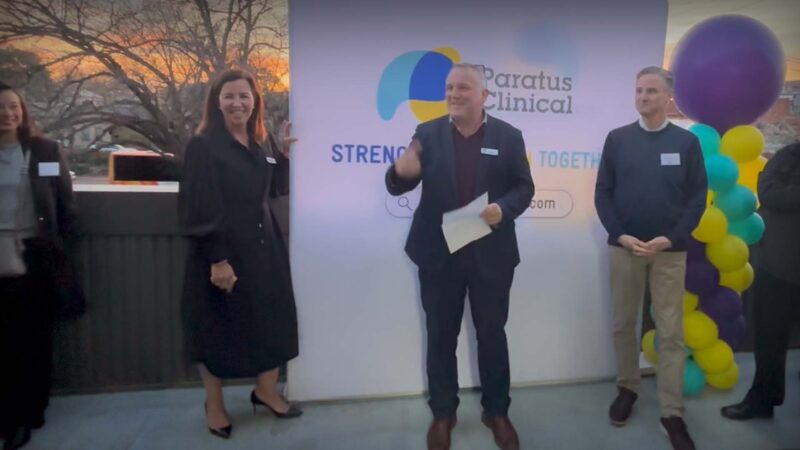
In July 2025, Paratus Clinical, a Australian provider of dedicated clinical trial services, announced the appointment of Megan Morrison as its new Chief Executive Officer, at the same time as a significant milestone as the company celebrating over a decade of impact in the clinical research space. Paratus now operates a network of five purpose-built, research-only clinics along Australia’s eastern seaboard.
-
Pharmacist Prescribing Model gets further support from state health
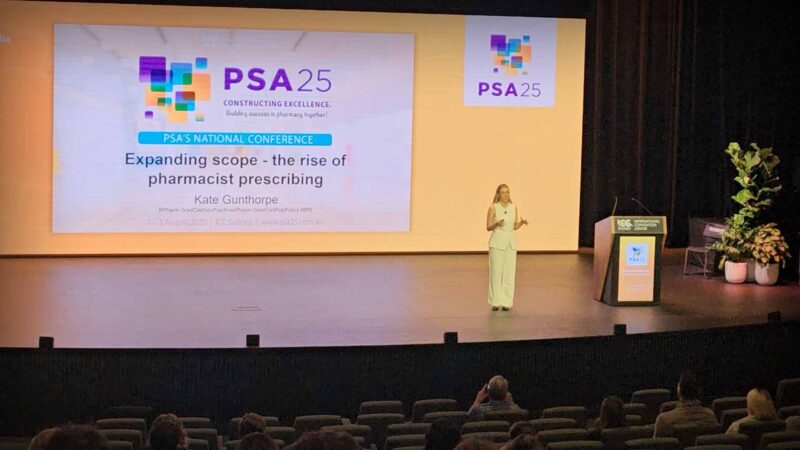
A full scope pharmacist prescriber model allows pharmacists to independently prescribe medicines within their professional competence, without requiring prior doctor authorisation. It extends pharmacists’ role beyond dispensing to include assessment, diagnosis of minor and chronic conditions, initiation and modification of therapy, and ongoing patient monitoring. This model integrates pharmacists into primary care teams, aiming to improve timely access to treatment, reduce pressure on general practitioners, and enhance continuity of care. Pharmacists use their clinical knowledge, patient records, and collaborative pathways to ensure safe prescribing. The model emphasises training, regulation, and accountability to maintain high standards of patient safety.