A LEADING MEDICAL RESEARCH INSTITUTE SPECIALISING IN ALZHEIMER’S DISEASE AND RELATED DEMENTIAS
Alzheimer’s Research Australia
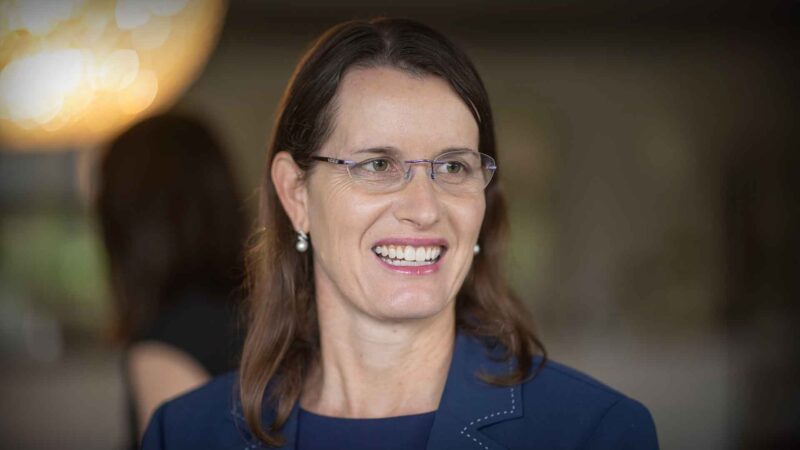
With Professor Vicky Vass, Chief Executive Officer
ORGANISATIONS IN MEDICAL RESEARCH
Filmed in Perth, Western Australia | November 2024
Professor Vicky Vass serves as the Chief Executive Officer of Alzheimer’s Research Australia, which is based in Perth, Western Australia. Australian Health Journal met with Professor Vass to hear of the organisation’s mission to solve the mysteries surrounding Alzheimer’s disease, and focus on detection as the key to their efforts.
Founded in 1993, the organisation now comprises a large research team, a clinical trials division, and an administrative support team. Their aim is to make Alzheimer’s a distant memory through rigorous research.
Their philosophy revolves around operating as one cohesive team, which includes all these parts as well as the board, fostering effective collaboration. Leading this team is Professor Ralph Martins AO, as the Chief Inspector in their mission. He focuses on uncovering pathways for prevention, intervention, and the latest treatments for neurodegenerative diseases.
Among the key studies highlighted by Professor Vass is the blood biomarker study led by Professor Ralph Martins, which aims to develop a cost-effective method for detecting Alzheimer’s through a simple blood test. Currently, detection methods involve multiple scans and intense processes, but this initiative could transform the landscape by making detection more accessible and affordable.
Another study is run by Dr. Prashant Bharadwaj who heads the research on childhood dementia, focusing on providing hope to the youngest patients affected by these debilitating diseases. His work is dedicated to ensuring that children have a future filled with memories rather than loss, striving to find ways to detect and ultimately cure childhood dementia.
The board of Alzheimer’s Research Australia comprises a diverse group of individuals, including academics and those involved in commercial work and aged care. The common goal uniting them is to find a cure for Alzheimer’s disease. Funding for the organisation primarily comes from donations and rely heavily on this support, as they do not receive significant government funding, although they do get some grants for research.
Professor Vass describes Alzheimer’s Research Australia as an incredible place to work, boasting a community akin to a family. Every role within the organisation is respected, contributing to a common goal of making Alzheimer’s a distant memory for future generations.
You Might also like
-
Delivering anaesthetic services to countries where surgical services can’t be provided
Dr Wendy Falloon is an Anaesthetist of over 30 years experience and a Fellow of Australian and New Zealand College of Anaesthetists (ANZCA). She studied medicine at the University of Tasmania, and worked in Hobart, Sydney and the Uk while completing her specialist qualifications. Her primary professional focus has always been to deliver the best possible experience of anaesthesia to each and every patient, and for them to know that she sees and values them, and their stories.
Having been born in Africa, she realised even as a child that health and wealth were largely a product of where people happen to be born. This sowed the seed of her ongoing desire to be of help to others in less fortunate circumstances, ultimately leading to her volunteer work with the Mercy Ships charity. This is one of the most fulfilling aspects of her career, and she has volunteered in Africa with Mercy Ships 8 times since 2014.
-
Landmark brain shape study
For over a century, researchers have thought that the patterns of brain activity that define our experiences, hopes and dreams are determined by how different brain regions communicate with each other through a complex web of trillions of cellular connections.
Now, a Monash University Turner Institute for Brain and Mental Health-led study has examined more than 10,000 different maps of human brain activity and found that the overall shape of a person’s brain exerts a far greater influence on how we think, feel and behave than its intricate neuronal connectivity.
-
Awareness, diagnosis and treatment of Congenital Hypothyroidism
Australian Health Journal spoke to Associate Professor MIchelle Jack about congenital hypothyroidism and newborn screening and her concerns in the varying thresholds for across different states in Australia. Despite the existence of newborn screening programs since the 1970s, there is still controversy surrounding the appropriate screening levels. Congenital hypothyroidism, affecting about one in 3500 infants, can lead to severe intellectual and physical impairment if not diagnosed early. The condition is mainly caused by the thyroid gland’s failure to develop properly, resulting in insufficient thyroid hormone production.