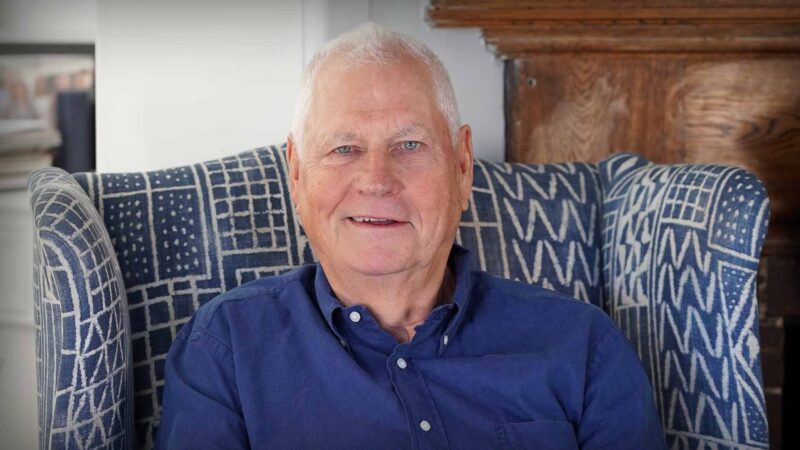
SYLVIA AND CHARLES VIERTEL CHARITABLE FOUNDATION MARKS 30 YEARS MILESTONE IN FUNDING RESEARCH New Fellowships to researchers in cancer metastasis, epigenomics and AI in early disease diagnosis & management
With
Associate Professor Paul Ekert, Co-Chair,
Medical Advisory Board, Sylvia and Charles Viertel Charitable Foundation
SEGMENT
Filmed in Sydney, Melbourne & Adelaide | December 2025
One of Australia’s largest charitable foundations, the Sylvia and Charles Viertel Charitable Foundation, is celebrating three decades of transforming Australian healthcare – with more than $90 million invested in medical research and a legacy of breakthroughs that are saving lives. Viertel Fellowships support some of Australia’s best and brightest researchers and clinicians, with 70 Fellowships awarded to date.
In late October 2025, the Sylvia and Charles Viertel Charitable Foundation, in association with Bellberry, announced the recipients of the 2025 Viertel Senior Medical Research Fellowships. Three Australian mid-career researchers who are advancing solutions for major illnesses including cancer, cardiovascular disease, and neurodegenerative diseases. The 2025 Viertel Senior Medical Research Fellows, who will each receive $1.375 million over five years to support their work, are:
- Dr Joanna Achinger-Kawecka, SAiGENCI for her work in advancing cancer therapy utilising innovative 3D chromatin structure mapping technology.
- Dr Dustin Flanagan, Monash Biomedicine Discovery Institute, Monash University, for addressing the impact of direct cell damage on gastric cancer initiation and progression.
- Associate Professor Zongyuan Ge, Monash AIM for Health Lab, Monash University for developing a personalised healthcare model integrating diverse patient information collected over time via AI. He is the recipient of a Bellberry-Viertel Senior Medical Research Fellowship.
The Viertel Foundation over 30 years has had significant impact in medical research, including
- Awarding 70 fellowships since 1995, each currently providing $1.375 million over five years to support Australia’s top mid-career researchers.
- 162 Clinical Investigator Awards providing $90,000 over one year have been granted, supporting early-career clinicians and stimulating clinical research across Australia.
- Research infrastructure grants totalling $2.45 million have been awarded, recognising the importance of establishing and maintaining the facilities required for world-class research environments.
- The combined total value of the Clinical Investigator Awards, the Fellowships, and infrastructure grants – including the most recent awards has reached $90,001,250. This substantial investment underscores the Foundation’s enduring commitment to advancing medical research and improving health outcomes for Australians.
- Funding has enabled breakthroughs in cancer, infectious diseases, respiratory illnesses, dementia, stem cell research, and more – directly impacting millions of Australians each year.
Source: Adapted from Equity Trustees media release
Photo Credit: Charles Viertel Photo, Queensland Eye Institute
Photo Credit: AAHMS Gala Dinner, Canberra November 2025, Australian Academy of Health and Medical Sciences
You Might also like
-
New Generative AI and machine learning frontier on unused patient care data
Drawing from GE’s 125-year legacy in healthcare, Amit Yadav, CEO GE HealthCare ANZ is leading efforts to integrate AI into medical imaging devices and optimise workflow efficiencies. He stresses the importance of leveraging the vast amount of untapped healthcare data, with an emphasis on automating manual processes to enhance productivity. Additionally, his focus extends to utilising AI for workflow optimisation and ensuring compliance with local regulations and standards to prioritise safety.
-
Closing the diagnostic gap in ovarian cancer detection
After 15 years in academia, Associate Professor Michelle Hill founded ProSeek bio to address one of the most urgent challenges in women’s health: closing the diagnostic gap in ovarian cancer.
For too long, women suspected of ovarian cancer have faced an impossible choice — undergo invasive surgery for diagnosis, only for up to 80% of those procedures to reveal no cancer, or delay intervention and risk diagnosis at a later stage when treatment options are fewer and survival outcomes are significantly worse.
-
A 40-Year Journey: Insights from Tasmania’s Chief Nurse & Midwife
Reflecting on her nursing journey on the Tasmanian Health website on International Nurses Day 2025, Chief Nurse and Midwife, Francine Douce, has seen plenty of change since the start of her nursing and midwifery career, 42 years ago.