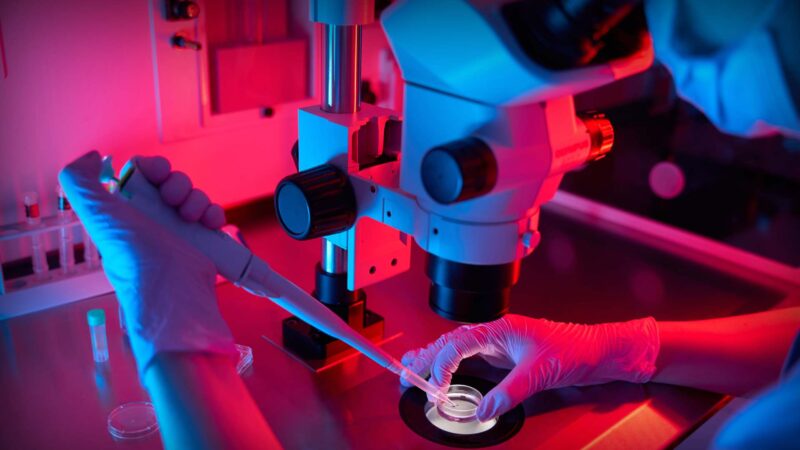
SMARTER INVESTMENT IN THE RESEARCH LONG GAME Government support for health and medical researchers and innovators needing investment cycle review
With
Nadia Levin, CEO
Research Australia
OP-ED SEGMENT
Filmed in Sydney | April 2026
In this Op-Ed, Nadia Levin, CEO of Research Australia, spoke with the Australian Health Journal about the need for smarter and more strategic investment in Australia’s health and medical research sector.
Levin argued that Australia’s approach to health and medical research has been shaped too heavily by short-term political cycles rather than a long-term national vision. She emphasised that meaningful progress in science, innovation, and healthcare requires sustained investment over many years.
According to Levin, health and medical research should not be viewed simply as a social good, but as a major driver of economic growth, productivity, and national resilience. She highlighted that every preventable hospital admission, faster diagnosis, or locally developed medical product contributes to economic performance.
Research Australia estimates that for every dollar invested in health and medical research, the Australian economy receives around four dollars in return.
Levin pointed to Australia’s past achievements, including the development of IVF, the cochlear implant, the HPV vaccine, and ultrasound imaging, as examples of how research can improve lives while creating industries and export opportunities.
A major focus in the need to strengthen the entire research pipeline, from early-stage discovery through to clinical translation, commercialisation, and integration into healthcare systems. Research Australia in a media release March 2026, noted that while the Medical Research Future Fund was created to distribute around $1 billion annually, it is currently providing only about $650 million each year despite holding approximately $24.5 billion.
Levin referenced costings from the Parliamentary Budget Office (PBO), commissioned by Dr Monique Ryan MP, showing the fund could distribute up to $1.4 billion annually without reducing its capital base, arguing that the money, demand, and need already exist, but stronger government commitment is required.
Source: Adapted from Research Australia media release March 2026
You Might also like
-
Course developed for people with intellectual disability to learn about research
Scope Australia is one of the largest not-for-profit disability service providers in Australia, supporting thousands of people with complex intellectual, physical, and multiple disabilities.
They operate across Victoria and New South Wales across more than 425 service locations.Scope’s research team developed a course about what research is and how to do research. Eight people with intellectual disability did the course. Five people took part in interviews to help Scope learn about the course and how to make it better.
-
Dental and oral health care priorities for the elderly
In 2023, there are a number of changes occurring in dental services including the start of a new Senate inquiry and new registered nurses in residential aged care. Yet in the meantime there are gaps and delays in dental and oral health interventions for elderly Australians, unless training is more widely deployed.
Australian Health Journal spoke to Leonie Short, a dental therapist working for Seniors Dental Care Australia on what she considers are dental and oral health priorities for the elderly, based on her work in the aged, home and disability sectors.
-
Reporting on Australian childhood visual impairment: the first 10 years
The Australian Childhood Vision Impairment Register (ACVIR), the first of its kind in Australia, captures uniquely Australian data which is used to improve services for children with vision impairment. The data is also available to researchers who work in the area of eye disease and disorders of vision.