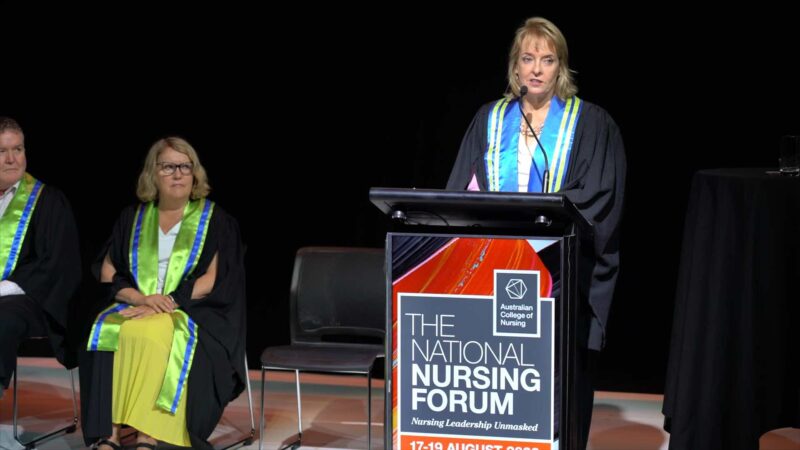
BIOSTATISTICS IN CLINICAL TRIALS
Kate Francis, Biostatistician (Snr Research Officer)
Murdoch Children’s Research Institute &
Honorary Research Fellow,
Department of Paediatrics, University of Melbourne &
Affiliate Biostatistician,
The Royal Children’s Hospital,
Melbourne, Australia
RESEARCHER PROFILE
Filmed in Melbourne, Australia | July 2025
Kate Francis is a biostatistician with the Murdoch Children’s Research Institute (MCRI), an Honorary (Senior Fellow) within Department of Paediatrics, the University of Melbourne and Affiliate biostatistician with Royal Children’s Hospital in Narrm (Melbourne), Australia.
As a biostatistician working in research and clinical settings, she plays a vital role in ensuring all projects adhere to best practice guidelines and are transparently reported. She has served as the lead statistician for the analysis of clinical trials across a broad range of subject areas, including neonatal resuscitation, BCG for allergy and infection, convulsive status epilepticus and her work has been published in the top journals such as The New England Journal of Medicine, JAMA, and The Lancet. Most recently she was awarded the 2025 Excellence in Trial Statistics Award for her work on the PLUSS trial.
Kate is also an expert in the measurement of adolescent health behaviours, determinants, and outcomes and this was recognised with her invitation to be a commissioner for the second Lancet Commission on Adolescent Health and Wellbeing which was recently released at the 2025 World Health Assembly meeting.
Kate believes in the importance of gender equity, diversity, and inclusion and was key team member in helping MCRI achieve bronze accreditation in the Science in Australia Gender Equity (SAGE) program.
Source: Supplied
You Might also like
-
Genetic disease research imitating function and architecture of organs
Professor Wolvetang was among the first to bring the first human embryonic stem cells to Queensland, with his Wolvetang Group at the AIBN now renowned for its work with organoids: growing them, studying them, and using them to try and understand diseases and human development.
Using cutting edge technology, Professor Wolvetang designs and grows organoids both for their own work and for labs across the country, coaxing pluripotent stem cells or tissue samples into 3D structures that mimic the function and architecture of real brains, livers, kidneys, spinal cords, and intestines.
-
DNA repair on the Fanconi anaemia pathway
Associate Professor Wayne Crismani is an internationally recognised expert in DNA repair, with a particular focus on Fanconi anaemia (FA)—a cancer-predisposition and bone marrow failure syndrome marked by extreme sensitivity to DNA damage. Based at St Vincent’s Institute in Melbourne, he leads a research program dedicated to understanding the genetic, cellular, and reproductive consequences of FA. He is currently supported by a Victorian Cancer Agency Mid-Career Fellowship and funding from the National Health and Medical Research Council.
-
Digital Biomarkers and AI for Optimal Diagnosis, Treatment, and Decision-Making
Associate Professor Johan Verjans is a clinician-scientist with a strong focus on cross-disciplinary translational research. In his role as Deputy Director at the Australian Institute for Machine Learning (AIML)—one of the world’s premier machine learning institutes, with over 200 researchers—and as Group Leader of Artificial Intelligence at the South Australian Health and Medical Research Institute (SAHMRI), he integrates his expertise in molecular medicine, clinical research, and advanced imaging with machine learning applications. This unique combination enables him to drive the translation of cutting-edge AI research into practical medical applications. He works with global teams from multinationals on AI problems.