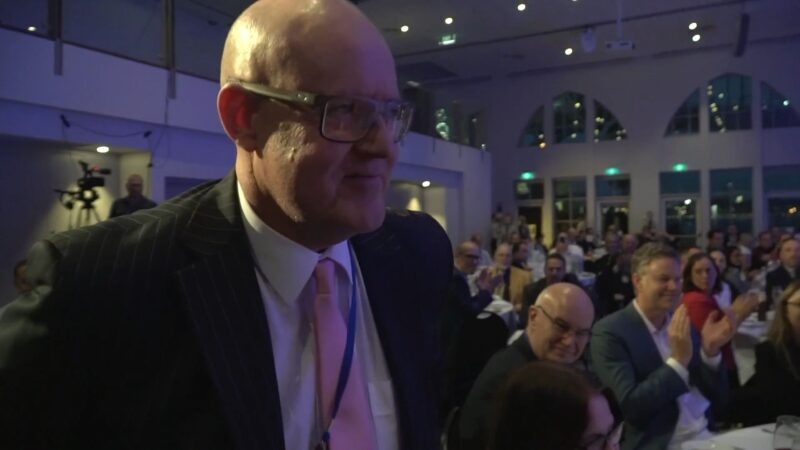
JOURNEY AS AN ORTHOPAEDIC SURGEON, RESEARCHER, SURGICAL SITE INFECTION CONTROL & BONE LOSS EXPERT Associate Professor Kevin Tetsworth, Orthopaedic Surgeon
As an orthopaedic surgeon, Associate Professor Kevin Tetsworth, is widely recognised for his expertise in managing orthopaedic infections, chronic osteomyelitis, limb salvage, and reconstruction. He holds clinical appointments at the Royal Brisbane and Women’s Hospital, the Wesley Hospital in Brisbane, Macquarie University in Sydney at the Limb Reconstruction Centre.
His credentials encompass a fellowship in the American Academy, a fellowship in the Royal College in Australia, and membership in the Australian Orthopaedic Association and the International Orthopaedic Trauma Association. Associate Professor Tetsworth’s clinical focus revolves around the comprehensive management of orthopaedic infections, segmental bone defects, high-energy trauma, limb salvage and reconstruction, deformity correction, limb lengthening, and prosthetic joint infections.
In tandem with his clinical practice, Associate Professor Tetsworth is deeply engaged in orthopaedic research, with a keen interest in infection management, infection control, limb salvage, bone defect reconstruction, biomarker development for infection, bone growth hormone delivery, and the use of 3D printed models for reconstructing segmental bone defects.
His professional journey has been profoundly shaped by training under esteemed mentors like Professor Dror Paley and Dr George Cierny in the United States. This formative training has equipped him with a high level of expertise in addressing complex orthopaedic conditions, particularly those related to bone loss and infection. Having practiced in the United States, notably at the University of Maryland and the shock trauma hospital in Baltimore, Associate Professor Tetsworth relocated to Australia in 2000 and has since played a pivotal role in advancing orthopaedic surgery at the Royal Brisbane Hospital.
Associate Professor Tetsworth’s unwavering commitment to advancing orthopaedic knowledge and his exceptional proficiency in managing challenging orthopaedic conditions have earned him widespread recognition within the field.
In this Australian Health Journal interview, Assoc Professor Tetsworth talks about his clinical and research career journey and gives advice for those in medicine considering a career in orthopaedic surgery,
Assoc Prof Tetsworth concludes with a discussion on ways infection control is handled in preoperative, intraoperative and post operatively for orthopaedic surgeries.
He discusses the techniques started in the 19th century with understanding of hand hygiene, surgical instruments being sterilised and discovery of antibiotics in the 20th century, to present day practises of patient modifiable factors such as prescreening patients, lifestyle adjustments such as BMI or weight management, checking HbA1c levels for those who are diabetic and use of triclosan coated sutures in wound dressing in the early post operative period.
You Might also like
-
Rural allied health mentorship program creates opportunities for students and practice
Melanie Roll, a director and physiotherapist at Gen Health Hamilton, is dedicated to nurturing the next generation of allied health professionals. Gen Health’s support begins with a work experience program for local secondary school students, where they can observe a variety of health services and participate in an annual careers night to explore allied health career pathways.
Upon moving to tertiary education, students are offered placements through a five-week program designed to transition them from observation to supervised practice and ultimately to seeing their own patients. In their final study year, they can apply for the mentorship program, which aids the transition into private practice.
-
Brain cancer Professor mentors Tasmanian researchers
Rosemary Harrup trained in Victoria and Tasmania in Medical Oncology and Clinical Haematology, completing a dual Fellowship in 2001. She is the current Director of Cancer and Blood Services at the Royal Hobart Hospital (RHH), a role she has held since 2009.
Australian Health Journal spoke to Rosemary about her journey in medicine and specifically her work in Clinical Trials in Brain Cancer and the value she placed on her senior clinicians as mentors and how she now mentors others.
-
Pharmacy led men’s urological health
Men’s urological needs refer to the medical and surgical conditions that affect the male urinary tract system and reproductive organs.
A urologist can address these concerns, however a pharmacy-led model of care developed by Brad Butt, called Mens Health Downunder has offered an alternative to certain urological needs of the male adult population over the past 10 years.
Australian Health Journal met with Brad to hear about his journey, Mens Health Downunder and the impact the pharmacy-led model of care has had on patient’s urological as well as mental health.