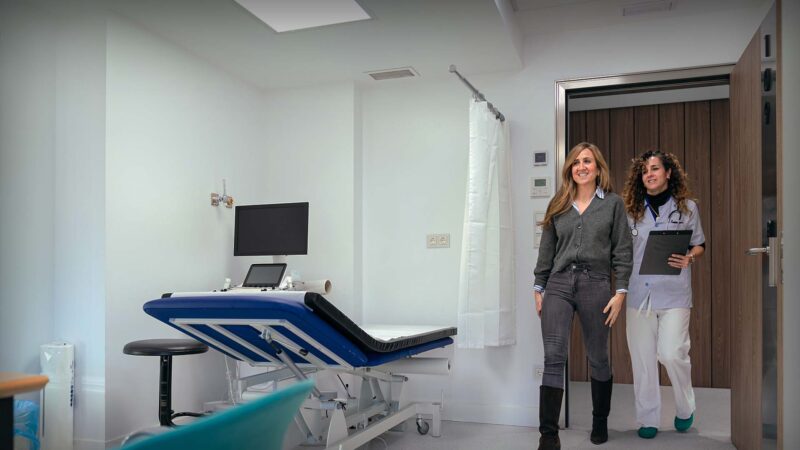
Unlike Emergency Departments that operate within public hospitals and some private hospitals, a Walk-in Specialist Emergency Clinic is located in the community and designed to provide comprehensive, coordinated acute care – from initial consultation and diagnostic services, to treatment and specialist referral if required – without the patient having to visit a hospital.
The first WiSE Clinic opened in Macquarie Park (North Ryde), New South Wales in early 2017, delivering immediate medical care when accidents or emergencies require more than a GP visit and are considered non-life threatening or unlikely to require admission to hospital.
Australian health journal spoke to the visionary, founder and CEO behind this WiSE Specialist Emergency clinic, Dr Pankaj Arora.
Dr Arora talks about the origins of his journey in emergency departments working in four continents as an Emergency Room physician for the past 28 years. His passion is to develop health care systems to help acute care in the community.
Stating 70% of people presenting at Emergency Departments in Australian Hospitals, not getting admitted, 7 years ago Dr Arora modelled these patients presenting to ER but breaking away from the hospital setting. This break away setting would deliver treatment by a team of doctors, allied health specialists, radiology, fracture clinic, chest pain clinic, TIA clinic, early pregnancy clinic and pathology services all co-located in the single facility.
Since putting the model in place and opening in 2017, the Macquarie Park WiSE Emergency Specialist Clinic has treated over 70,000 patients. Dr Arora sees it as a very efficient and cost effective model, where the patient is seen by a specialist in a multidisciplinary team within half an hour and receives results within an hour. He emphasises the clinic has not replaced General Practice nor the Emergency Department in hospital.
From the success of the Macquarie Park, NSW clinic, last year Dr Arora set his plans in motion to open a 2nd WiSE emergency specialist care clinic, this time in Queensland. This happened only after 3 years of planning and modelling prior to the opening of the new centre in September 2022. However since opening in Robina, Gold Coast, the new WiSE clinic has been treating on average 20 patients per day – a faster rate than the first 6 months of the Macquarie Park, NSW clinic.
In closing Dr Arora talks about the differences between the WiSE model and urgent care clinics. Scaled down versions of emergency care departments in urgent care centres fail to address the treatment required for patients between General Practice and at hospital emergency departments.
His plans now include opening 10 clinics in the next 5 years, with an expectation that 20-50 clinics would be needed across Australia in the medium to long term.
You Might also like
-
Priming Australia for social prescribing
Social prescribing provides support in various areas of people’s lives, leading to increased confidence, improved navigation of systems, and enhanced friendships and trust in healthcare, while communities should be designed in an age-friendly way to prevent isolation.
In Part 1 of the Models of Care on Social Prescribing, Australian Health Journal spoke to 4 people advocating for social prescribing in Australia
-
Student nurse placements in primary health care
With an urgent need to manage increasing rates of chronic disease, an ageing population, and a rapidly-ageing primary health care nurse workforce, Australia desperately needs more primary health care nurses to enter the workforce before the current generation retires and cannot pass on its skills.
Most nurses start their career in a hospital. Historically, it was difficult for universities and tertiary education providers to arrange placements for student nurses in primary health care. However, the APNA Student Nurse Placement Program provides student nurses with a foot in the door to a career in vibrant primary health care settings such as general practice or community health to perform supervised activities.
-
Confronting picture of growing women’s health crisis in uterine cancers
Uterine cancers have become Australia’s fastest-growing women’s cancer, with incidence doubling over the past 25 years and projected to continue to surge. Without immediate action, more than 44,000 women are expected to be diagnosed by 2035, and 8,900 will lose their lives to the disease.
Released November 2025, Australia’s first State of the Nation: Uterine Cancers in Australia 2025 report by the Australia New Zealand Gynaecological Oncology Group (ANZGOG), reveals a confronting picture of a growing women’s health crisis that has gone largely unseen and one that now requires immediate, coordinated national action.