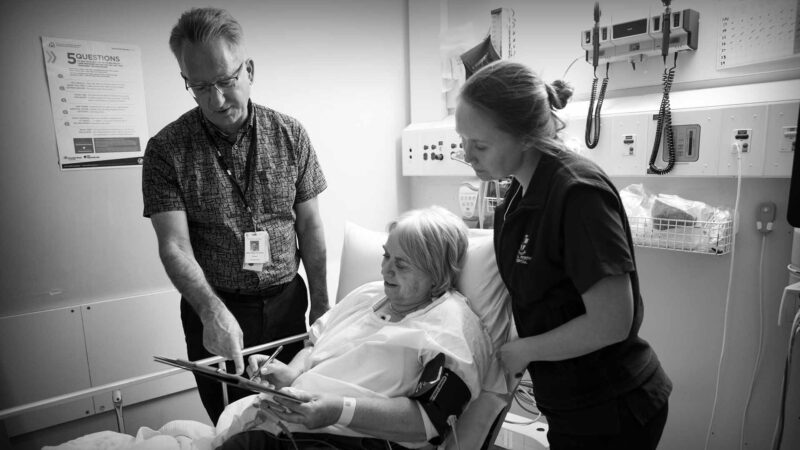
NEUROSCIENCE, NEUROPHARMACOLOGY AND EXERCISE SCIENCE
Dr Jacob Thorstensen,
Neuroscientist & Assistant Professor,
Faculty of Health Sciences & Medicine
Bond University, Queensland, Australia &
Honorary Research Fellow
The School of Biomedical Sciences,
The University of Queensland
Queensland, Australia
RESEARCHER PROFILE
Filmed in the Gold Coast, Australia | November 2025
Dr Jacob Thorstensen is an early-career Assistant Professor in Neuroscience and Physiology in the Faculty of Health Sciences & Medicine at Bond University. He is also an honorary research fellow in The School of Biomedical Sciences at The University of Queensland.
Dr Thorstensen graduated first-class honours in exercise science, completed a PhD in neurophysiology at Griffith University, and completed a post-doctoral research fellowship in neurology at The University of Queensland.
His research uses non-invasive neurostimulation techniques to study how the brain and spinal cord control muscles in human subjects.
His findings have been published in several discipline-leading scientific journals including The Journal of Physiology, Journal of Neurophysiology and Neuropharmacology and disseminated at large, international scientific meetings.
His work has unveiled several new neuroscientific mechanisms which have future applications for movement disorders. Recent recognitions include being on the Forbes 30 Under 30 list for the Healthcare & Science Category (2024) and being selected as a Career Achievement Award finalist in the 7NEWS QLD Young Achiever Awards (2025).
Dr Thorstensen sits on the editorial boards for The Journal of Physiology and Journal of Applied Physiology.
He is a part of the executive committee for the Australasian Brain Stimulation Society, and the early career researcher and education committees for the International Society of Electrophysiology and Kinesiology.
He is also part of a team that has recently been funded through a Multiple Sclerosis Australia Incubator Grant for a neurostimulation project.
Source: Supplied
You Might also like
-
Investigating invasive lobular carcinoma and metaplastic breast cancer sub-types
Assoc Prof McCart Reed is the scientific lead on an MRFF-funded (Medical Research Future Fund) genomics program investigating the potential for the application of Whole Genome Sequencing in the breast cancer care pathway in Australia, ‘Q-IMPROvE’. She applies genomics and spatial transcriptomics methodologies to archival clinical samples to understand the differences between tumour types and their potential for treatment. Amy is passionate about clinical research, biobanking and precision oncology. In addition to her breast cancer research portfolio, she is on the steering committee for the Brisbane Breast Bank and the Scientific Advisory Board for Breast Cancer Trials.
-
Metabolic phenotyping, lipidomics & bioinformatics in dementia
Dr Luke Whiley is a dementia researcher whose work focuses on understanding how the body’s metabolism, particularly the biology of fats known as lipids, influences our health throughout ageing.
His research explores how the body responds to illness, lifestyle, and environmental stress at a chemical level, and how these responses shape longterm disease risk. Using advanced blood-based measurement technologies, Dr Whiley studies thousands of small molecules at once to build a snapshot of a person’s metabolic health. By combining these measurements with data science approaches, his work identifies biological pathways that become disrupted in disease, providing insight into why some people are more vulnerable to conditions such as dementia.
-
Food and fasting periods as medicine to prevent disease
Professor Leonie Heilbronn is based at the South Australian Health and Medical Research Institute (SAHMRI), where she leads the Obesity and Metabolism laboratory. Her research is at the interface between basic and clinical science. She is internationally recognised for her work in nutritional modulation in humans and has made major contributions to our current understanding of mechanisms underlying conditions such as insulin resistance, particularly inflammation and lipid metabolism. She has also contributed significantly to current concepts of caloric restriction (CR), intermittent fasting (IF) and time restricted eating (TRE) in humans. She has published more than 110 peer reviewed papers in scientific journals and is an Associate Editor of Obesity, and Obesity Research and Clinical Practice.
https://orcid.org/0000-0002-6821-1547