
-
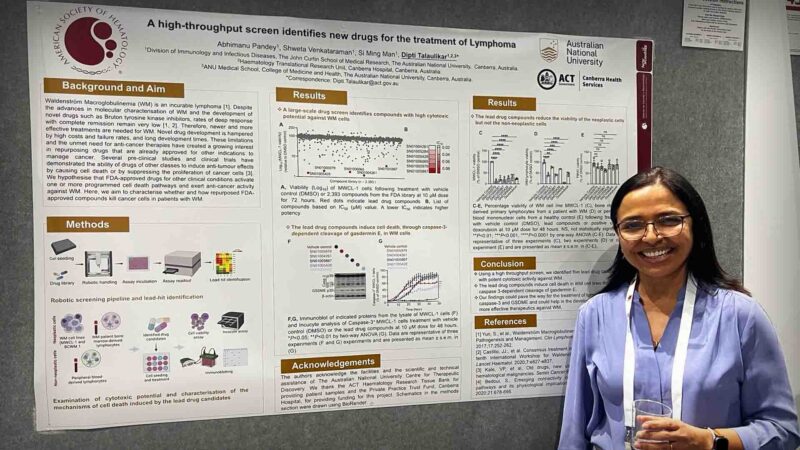
Lymphoma, Myeloma and Genomics
Professor Dipti Talaulikar is a clinical and laboratory haematologist with expertise in genomics, working at Canberra Health Services, and Professor at ANU. She has a clinical and research interest in lymphoma, myeloma and genomics, and has authored close to 100 peer reviewed papers, including several clinical guidelines that have had a significant impact on clinical practice.
-
Inner ear organoids for the study of human hearing and balance
Dr Jackie Ogier is an auditory neuroscientist, with a research focus on the molecular biology of hair cells, the specialised sensory receptors in the ear that detect sound and balance. She is a postdoctoral research fellow in the laboratory of A/Prof Bryony Nayagam, supported by a prestigious Passe and Williams foundation fellowship.
Dr Ogier’s experience broadly spans the genetics of hearing loss, disease modelling, micro dissection, primary cell culture, stem cell culture, organoids, and proteomics. Overall, she aims to generate knowledge of hearing and vestibular sensory biology.
-
Clinical pathways for acute care in Tasmanian Emergency Departments
Assoc Prof Viet Tran has built Emergency Medicine Research in Tasmania from the ground up, which has culminated in the success of a AUD$3 million Australian Government Medical Research Futures Fund grant looking into the Implementation of Clinical Pathways for Acute Care in Tasmania project. Dr Tran is also the Emergency Medicine Discipline lead within the Tasmanian School of Medicine and has key roles to play within Emergency Medicine training. He feels privileged to be able to teach and mentor across the whole spectrum of becoming a doctor, from watching students grow into junior doctors, senior registrar and as fellow medical specialists.
Post Views: 1,870
Blister management and impact on firefighters


Recent Segments
- Drug delivery of targeted therapies for pancreatic cancer, motor neurone disease
- Physiotherapist-led care for musculoskeletal conditions in the emergency department
- RESEARCH IMPACT: 32 years of understanding, diagnosing, treating & preventing the onset of heart disease
- Research Australia Awards celebrate researchers in life-changing science and discovery
- Connecting Students with Careers in MedTech