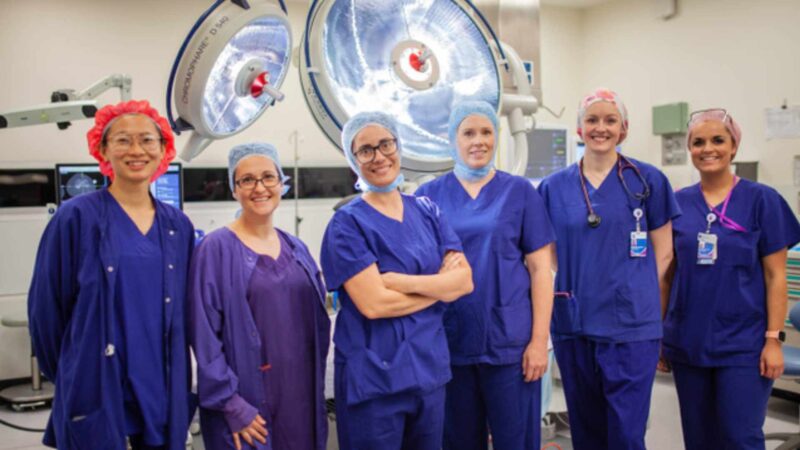
The critical role of nursing at birth, at death and everything in between.
Professor Alison McMillan PSM spoke with Australian Health Journal about the role of Chief Nursing and Midwifery Officer at the Australian Government Department of Health and Aged Care.
Alison was appointed as our Chief Nursing and Midwifery Officer in November 2019.
Alison is a registered nurse with a Bachelor of Education and a Master of Business Administration.
In June 2021 Alison was awarded a Public Service Medal for outstanding public service to driving the Government’s national health response priorities during the COVID-19 pandemic, particularly to infection prevention measures.
The role of the Chief Nursing and Midwifery Officer
As the nation’s Chief Nursing and Midwifery Officer, Alison delivers high-level policy advice to the Minister for Health, and the Executive and staff within the Department of Health. She represents Australian nursing at national and international levels.
As a member of the Australian Health Protection Principal Committee and as co-chair of the Infection Control Expert Group, her role in the coronavirus response is to advise the Australian Government to realise the value of the nursing and midwifery professions in achieving safe, quality and compassionate health and aged care outcomes for the Australian community.
This interview was recorded following Alison’s keynote presentation at the National Nursing Forum in Darwin in August 2022, organised by the Australian College of Nursing (ACN).
You Might also like
-
Developing the nation’s first Health and Medical Research Strategy
Professor Steve Wesselingh serves as the CEO of NHMRC, having initially trained as an infectious diseases doctor. His career includes prominent roles such as Head of the Infectious Diseases Unit at the Alfred Hospital, Director of the Burnett, Dean of Medicine at Monash University, and the inaugural Director of SAHMRI. Under his leadership, NHMRC plays a critical role in funding health and medical research, allocating approximately a billion dollars annually to investigator-led projects, clinical trials, and various strategic initiatives. NHMRC also collaborates internationally with organisations such as the MRC and the EU, and manages grant allocation for the MRFF, which distributes $650 million each year.
-
Gaining a better understanding of perimenopause and menopause
Nearly half of women seeking help for menopause symptoms are already experiencing clinically significant distress by the time they ask for support, according to a recent national benchmark report released by Metluma.
The 2026 Australian Menopause Experience Report, based on insights from 1,468 women using Metluma’s UMA40 assessment tool, found 43% triggered at least one clinical red flag at baseline (referral to a doctor within 24-48 hours), with more than one in five presenting with multiple red flags linked to more complex symptom burden.
-
Addressing Wound Management
The cost of chronic wounds in Australia is estimated to be $3 Billion per year, impacting 420,000 Australians. Not only is this a national economic concern, but more importantly, is the suffering the person may be going through.
Australian Health Journal met with Hayley Ryan, Board Director and Chair at Wounds Australia and Director at WoundRescue to hear her work in chronic wound management, palliative wounds and pressure injury prevention to comfort those living with a wound.