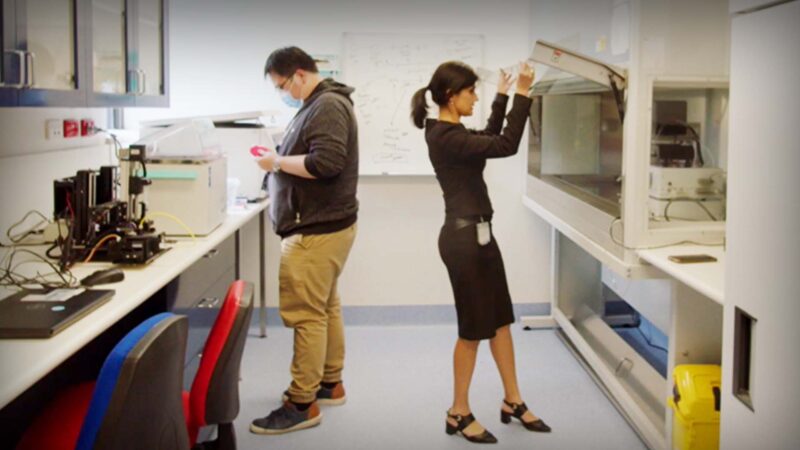
Medicines Australia’s Continuing Education Program (CEP) is designed to educate medical representatives to a recognised industry standard. Dr Tristan Ling, CEP Academic Lead and Project Manager at the College of Health and Medicine, University of Tasmania talks about the 900 students that come through the program each year.
The CEP is primarily directed at medical representatives working within the prescription medicines industry, but is also recommended to people who may not be currently employed within the industry but would like to pursue a career as a medical representative. It is also available to personnel working for organisations interacting with the pharmaceutical industry.
Medicines Australia CEO Elizabeth de Somer talks about how the CEP program provides the information needed by medical representatives, that talk to health care professionals, talk with accuracy, balance and in an evidence based manner about their products.
Australian Health Journal spoke with recent CEP graduates Samantha Wicks, Christopher Lems and Megan-Anne Jefferys on their experiences in the program and how it positively impacted their confidence and knowledge of the industry.
The CEP is currently offered online through the University of Tasmania’s Unit for Medication Outcomes Research and Education (UMORE), which is housed in the University’s Pharmacy Division.
You Might also like
-
Study: First time stroke survivors have substantial immediate and accelerated long term cognitive decline
New evidence from the Centre for Healthy Brain Ageing (CHeBA) indicates that older adults who experience a stroke for the first time will have substantial immediate and accelerated long term-cognitive decline.
-
Foundation outlines breast cancer research strategy
Australian Health Journal met with Associate Professor Cleola Anderiesz, CEO of the National Breast Cancer Foundation to hear of the new 5 year Pink Horizon research strategy. Those with lived experience of breast cancer, along with researchers, clinicians, and other funding organisations, have contributed to the development of the foundation’s new five-year Pink Horizon research strategy. This ambitious plan aims to invest $125 million to accelerate research efforts towards the vision of ending deaths from breast cancer.
-
Surgeon-scientist path laid for medical device research
In 2022, Distinguished Professor Gordon Wallace AO and Professor Mukherjee jointly established Beyond Science as a clinician led, academically supported and clinician run Australian-first medical technology translation program.
The program is aimed at early career researchers and clinician-scientists working in medical device research specifically in otolaryngology (ear, nose, and throat), head and neck surgery.