BUILDING ON TRUST AND COLLABORATION TO ROADMAP NEXT PHASE OF AUSTRALIA’S VACCINE SUCCESS Conference returns to lead charge in strengthening the entire life cycle of vaccine development
With
Leah Goodman
Chief Executive Officer
Biointelect
SEGMENT
Filmed in Sydney | September 2026
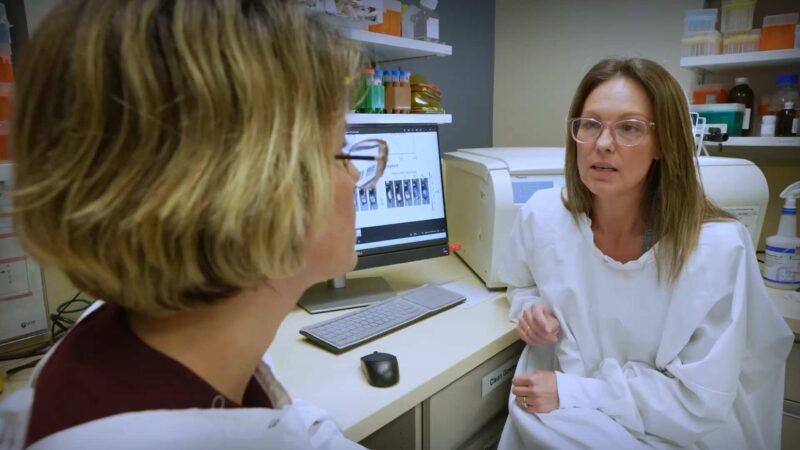
Trust, collaboration and a stronger vaccine ecosystem were the focus of the second Australian Vaccine Value Chain Conference, held in Sydney, September 2026 and hosted by life science consultancy Biointelect. More than 200 leaders from government, industry, academia, research, investment and the immunisation community attended, joined by international representatives including the International Vaccine Institute and the Coalition for Epidemic Preparedness Innovations.
The conference took place amid falling global immunisation rates, rising misinformation, shrinking funding and a resurgence of measles. In Australia, childhood immunisation rates have fallen by between 2.3 and 4.3 percentage points at standard age milestones each year since 2020. Discussions covered research funding, regional health security, sovereign manufacturing, data and capacity building, vaccine access, uptake resistance and pandemic preparedness. Delegates noted progress through the new Australian Centre for Disease Control and the updated National Immunisation Strategy, but experts say further action is needed.
In an interview with the Australian Health Journal, Biointelect CEO Leah Goodman said the mood had shifted since the inaugural 2024 conference, when nervousness was evident. This year, she said, attendees were “feeling that they had a role to play in the shaping of the Australian ecosystem.” She pointed to the first six companies announced in the Biointelect Venturer incubator, funded through the Medical Research Future Fund, as a sign of progress.
Goodman also stressed the importance of international cooperation, stating that “no country can build a resilient vaccine ecosystem alone.” A white paper will capture the discussions and set priorities for the next two years.
Source: Adapted from Biointelect media release (September 2026) and transcript
You Might also like
-
Research funded to investigate early-onset bowel cancer progression
Bowel Cancer Australia recently announced a team led by Professor Michael Samuel as the successful applicant for a three-year $600k early-onset bowel cancer research project through the 2023 round of Cancer Australia’s Priority-driven Collaborative Cancer Research Scheme (PdCCRS).
-
State of private healthcare in Australia
Australia’s healthcare system is often described as a mixed system, with a combination of public and private providers. While public healthcare through Medicare provides universal coverage for essential services, private healthcare offers additional options and amenities for those who can afford them.
Private Healthcare Australia (PHA) is the Australian private health insurance industry’s peak representative body that currently has 21registered health funds throughout Australia and collectively represents 98% of people covered by private health insurance. PHA member funds today provide healthcare benefits for over 14 million Australians.
-
Research, Mentorship and the PhD Experience
Pancreatic cancer remains one of the deadliest cancers, with survival rates below 10 per cent and treatments often as harsh as the disease itself.
Finding better ways to treat one of the deadliest cancers has become the focus of a University of Wollongong research team, where the relationship between a PhD supervisor and candidate has also played an important role in shaping the next generation of researchers.