CASE STUDY increasing survival, free of bronchopulmonary dysplasia (BPD) in extremely preterm infants
With
Professor Brett J. Manley, Consultant Neonatologist
Mercy Hospital For Women, Melbourne &
Professor of Neonatal Medicine,
Department of Obstetrics, Gynaecology and Newborn Health,
University of Melbourne, Australia
Kate Francis, Biostatistician (Snr Research Officer)
Murdoch Children’s Research Institute, Melbourne &
Honorary Research Fellow,
Department of Paediatrics,
University of Melbourne &
Affiliate Biostatistician, The Royal Children’s Hospital,
Melbourne, Australia
Professor Christopher Reid, Chair
Australian Clinical Trials Alliance (ACTA) &
School of Public Health and Preventive Medicine, Monash University &
School of Population Health at Curtin University,
Western Australia
CASE STUDY
Filmed in Melbourne & Perth, Australia | May 2026
Negative results in a clinical trial can be extremely valuable — both scientifically and ethically. A “negative result” usually means the treatment being tested did not work better than the standard treatment, placebo, or expected outcome.
The aim of the PLUSS trial was to find out if installation of budesonide (a steroid) with surfactant to the lungs of extremely preterm babies helps to prevent lung disease, or Bronchopulmonary dysplasia (BPD).
BPD is a chronic inflammatory lung disease characterised by disordered alveolar and vascular development, most commonly affecting extremely preterm infants exposed to mechanical ventilation and oxygen therapy for respiratory distress syndrome (RDS). BPD is associated with mortality, and adverse long-term pulmonary and neurodevelopmental outcomes. Despite advances in neonatal care including antenatal corticosteroids, exogenous surfactant, and the increasing use of non-invasive respiratory support, the incidence of BPD has increased in the state of Victoria in 2005 compared with earlier eras.
Extremely preterm infants participating in the trial were monitored closely after birth and an assessment completed at 36 weeks to check for BPD. Participating infants were also followed up when they are two years old.
The trial was led by a team of researchers at the Royal Women’s Hospital, Melbourne and the Liggins Institute in Auckland, New Zealand and had 29 participating centres around the world.
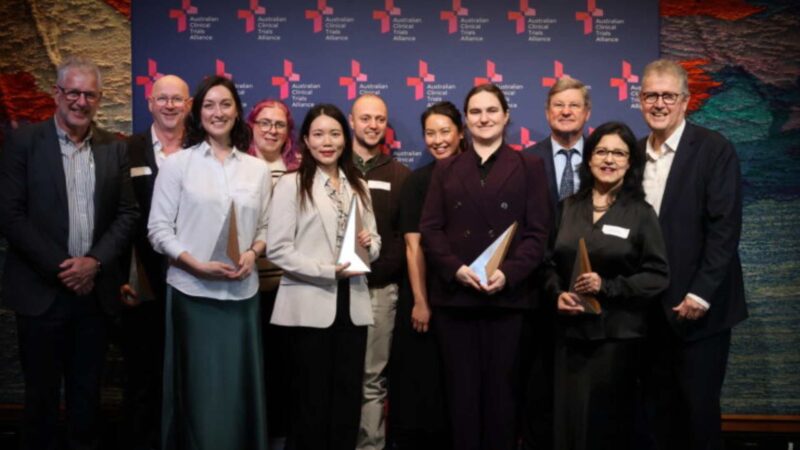
In 2025 the PLUSS Trial received the Australian Clinical Trials Alliance (ACTA) Trial of the Year 2025 Award as well as the ACTA STInG Excellence in Trial Statistics Award2025.
Source: Adapted from plusstrial.org website
You Might also like
-
Developing upper limb motor biomarkers of dementia
Kaylee is currently a research fellow with the Wicking Dementia Research and Education Centre at the University of Tasmania. She has recently submitted her PhD thesis, reporting the findings of her research on developing upper limb motor biomarkers of dementia. She has postgrad degrees in physiotherapy and experience working in the community and aged care across Tasmania for several years, where she worked with people with dementia.
-
Digital Biomarkers and AI for Optimal Diagnosis, Treatment, and Decision-Making
Associate Professor Johan Verjans is a clinician-scientist with a strong focus on cross-disciplinary translational research. In his role as Deputy Director at the Australian Institute for Machine Learning (AIML)—one of the world’s premier machine learning institutes, with over 200 researchers—and as Group Leader of Artificial Intelligence at the South Australian Health and Medical Research Institute (SAHMRI), he integrates his expertise in molecular medicine, clinical research, and advanced imaging with machine learning applications. This unique combination enables him to drive the translation of cutting-edge AI research into practical medical applications. He works with global teams from multinationals on AI problems.
-
Professor Christoph Hagemeyer
RESEARCH IN NANOBIOTECHNOLOGY
@ MONASH UNIVERSITY
VICTORIA, AUSTRALIA