
 https://orcid.org/0000-0002-6821-1547
-
At the frontier of human cellular neuroscience research
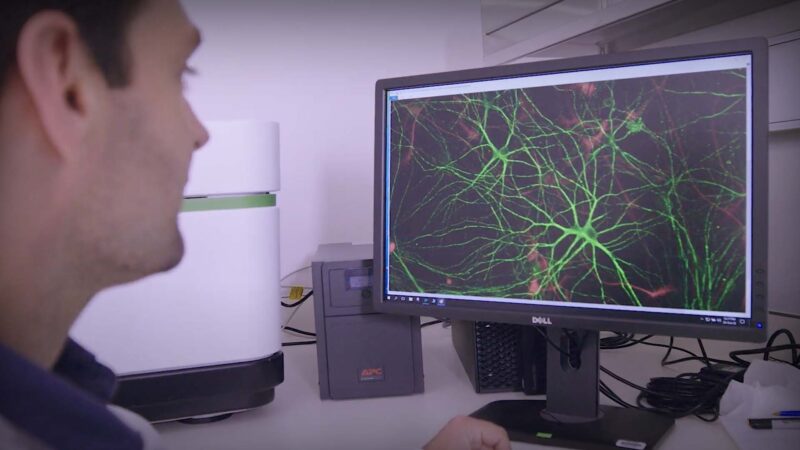
Associate Professor Cedric Bardy is the Director of The Laboratory for Human Neurophysiology, Genetics & Stem Cells, located at SAHMRI. South Australia.
His current research uses preclinical, patient-derived cell models to test innovative therapeutic strategies, with a current focus on Parkinson’s disease, brain cancer and childhood dementia (Sanfilippo syndrome).
His work has established a platform to facilitate the discovery and validation of treatments for brain disorders. Their research is at the frontier of human cellular neuroscience research and translational applications that benefit global public health.
-
Metabolic phenotyping, lipidomics & bioinformatics in dementia
Dr Luke Whiley is a dementia researcher whose work focuses on understanding how the body’s metabolism, particularly the biology of fats known as lipids, influences our health throughout ageing.
His research explores how the body responds to illness, lifestyle, and environmental stress at a chemical level, and how these responses shape longterm disease risk. Using advanced blood-based measurement technologies, Dr Whiley studies thousands of small molecules at once to build a snapshot of a person’s metabolic health. By combining these measurements with data science approaches, his work identifies biological pathways that become disrupted in disease, providing insight into why some people are more vulnerable to conditions such as dementia.
-
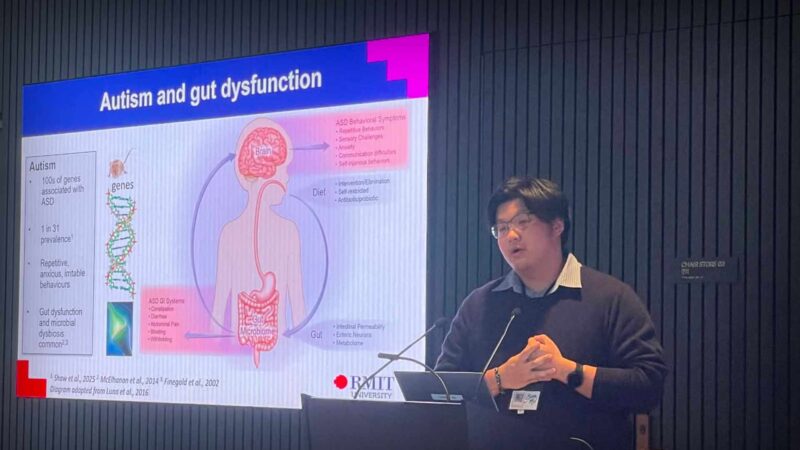
Gut microbiome and gastrointestinal dysfunction in people with autism
Vic Lin is a final-year PhD student in the Gut-Brain Axis Laboratory at RMIT University in Melbourne, Australia. His research focuses on understanding the gastrointestinal dysfunction commonly experienced by people with autism and exploring the connection between the gut microbiome and gastrointestinal function.
Post Views: 644
Neuroscience, neuropharmacology and exercise science

Recent Segments
- Drug delivery of targeted therapies for pancreatic cancer, motor neurone disease
- Physiotherapist-led care for musculoskeletal conditions in the emergency department
- RESEARCH IMPACT: 32 years of understanding, diagnosing, treating & preventing the onset of heart disease
- Research Australia Awards celebrate researchers in life-changing science and discovery
- Connecting Students with Careers in MedTech