
-
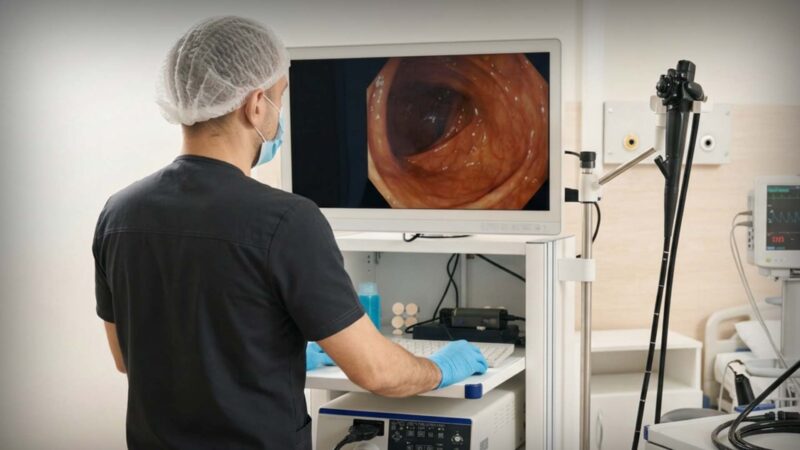
Concerning increases in Non-Alcoholic Fatty Liver Disease and colorectal cancer
Dr Kieran Longley is a Gastroenterologist and Hepatologist committed to providing comprehensive, patient-centred care across a broad spectrum of digestive and liver conditions. He completed his medical degree at the University of Tasmania before undertaking physician training at St Vincent’s Hospital Sydney. Furthering his academic and clinical expertise, he obtained a Master of Science in Internal Medicine from the University of Edinburgh.
-
Allied Health Leader shares career insights
Mirella Vagnarelli is a distinguished healthcare leader with proven expertise across South Australia and the United Kingdom, where she has successfully led large, multidisciplinary teams. Holding a Master of Business Administration (Health) from Flinders University, she earned Fellowship status with the Australasian College of Health Service Management in 2022. In 2023, Mirella was honoured as a scholarship recipient for the prestigious ‘Women in Leadership’ Program at the Monash Centre for Health Research and Implementation.
-
Awareness campaigns and HCP Toolkits for thyroid health
In 2021, the Australian Thyroid Foundation released analysis to show, well over 1 million Australian are living with an undiagnosed thyroid disorder, including thyroid cancer, lower IQs, lifelong disability, and a causal or possible contributory factor – in the development of other neurological disorders such as ADHD and autism. Some of the challenges for diagnosis and treatment can be addressed by producing material for health care practitioners during patient presentations.
‘Recent statistics show well over 1 million Australians are living with an undiagnosed thyroid disorder, awareness and testing can prevent unwarranted outcomes for mothers and their babies’ says ATF CEO Beverley Garside OAM
The Australian Thyroid Foundation has lodged a Pre-Budget Submission for the Federal Budget 2024-25 to counter increasing misinformation on social media creating dietary deficiencies such as an increasing number of young women, who are planning pregnancy or already pregnant opting for plant based milks such almond, soy or oat milk coffee as an alternative to standard cow’s milk, which is a source of iodine and alternate milks do not include.
Post Views: 1,113
Understanding extracellular vesicles in cancer therapy research


Recent Segments
- RESEARCH IMPACT: 32 years of understanding, diagnosing, treating & preventing the onset of heart disease
- Research Australia Awards celebrate researchers in life-changing science and discovery
- Connecting Students with Careers in MedTech
- HEALTH CARE BRIEF: Shingles (Herpes Zoster)
- Large-scale clinical and population-based research