OCCUPATIONAL THERAPY CREATES PROFOUND IMPACTS ON CLIENT AND PATIENT LIVES
Margeaux Bartholomew-Carle
Occupational Therapist &
Chief Executive Officer, Ardant
PEOPLE IN HEALTH CARE
Filmed in Adelaide, South Australia | December 2024
In Australia, access to allied health services such as occupational therapy is increasingly challenging. Barriers like long wait times affect over 600,000 National Disability Insurance Scheme (NDIS) and 1.5 million aged care participants. With both cohorts expected to grow exponentially in coming years, the pressure on an already stretched system is set to increase.
Australian Health Journal met with one Occupational Therapist who encourages those entering the profession to embrace continuous learning and seek mentorship to maximise their impact on clients’ lives. Through her company she has a nation-wide mission to transform client access to allied health services like occupational therapy using artificial intelligence (AI).
Margeaux Bartholomew-Carle is an Adelaide based registered Occupational Therapist and the Founder and CEO of Ardant.
Throughout her career, Margeaux has worked in various settings, including aged care, disability, assistive technology, prescription, and mental health. This diverse experience has deepened her understanding of the different needs among client groups.
A significant turning point came when she worked as a solo practitioner and realised that the heavy administrative burden often kept her from important family moments, especially while her father was in the hospital with advanced prostate cancer. This experience motivated her to establish Ardant, focused on enabling OTs to prioritise client care over administrative tasks.
Under her leadership, Ardant has created an all-in-one online practice management platform designed to reduce administrative burdens for independent occupational therapists across Australia, ultimately enhancing access to OT services and improving client outcomes.
Margeaux believes that the role of occupational therapists is gaining recognition, particularly with the introduction of the NDIS, but acknowledges there are persistent misconceptions about the profession. To raise awareness, she advocates for targeted campaigns to educate GPs, health professionals, and the public about the value of OT in primary healthcare.
You Might also like
-
A New Era in Primary Health Care Nursing
Coinciding with this year’s International Nurses Day, this week’s Federal Budget has had some significant outcomes for the primary health care, nursing workforce.
The Federal Budget delivered on 9th May 2023, APNA believes will strengthen Australia’s primary health care (PHC) system by addressing growing nursing shortages, seeing more nurses hired where they are needed, and better utilising the largest workforce in PHC of nearly 100,000 nurses to their full potential to reduce the pressure on the health system.
-
Mission to raise awareness of sarcoma and need for clinical trial funding
Sarcoma, a rare and aggressive cancer, remains the deadliest cancer for children and young adults, accounting for nearly one third (30%) of cancer-related deaths among those aged 15–24 and one tenth (10%) of those aged 0–14. Further, still severely under-diagnosed, sarcoma only accounts for one sixth (15%) of all cancer diagnoses in the 15 – 24 age group, and less than a tenth (8%) among children under 10.
-
Landmark brain shape study
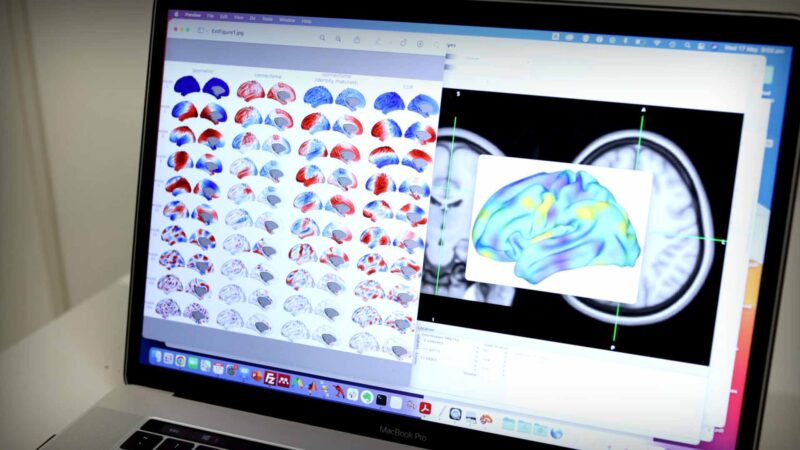
For over a century, researchers have thought that the patterns of brain activity that define our experiences, hopes and dreams are determined by how different brain regions communicate with each other through a complex web of trillions of cellular connections.
Now, a Monash University Turner Institute for Brain and Mental Health-led study has examined more than 10,000 different maps of human brain activity and found that the overall shape of a person’s brain exerts a far greater influence on how we think, feel and behave than its intricate neuronal connectivity.