OCULAR DISEASE AND EARLY ONSET MYOPIA
Dr Jessica Mountford
Brian King Fellow &
Head of Functional Molecular Vision Group
Lions Eye Institute, Western Australia
RESEARCHER PROFILE
Filmed in Perth, Western Australia | November 2024
Dr Jessica Mountford received her highly ranked PhD from Monash University, Melbourne, in 2012, in the field of biochemistry and clinical haematology. Her work investigating novel ways to prevent thrombosis, a leading cause of heart attack and stroke, led to a first author publication in Nature Communications.
Following this, Dr Mountford relocated to Perth and went on to complete two post-doctoral appointments at the University of Western Australia, where she began research on the comparative evolution of visual and non-visual opsin across species of vertebrate, from the primitive lamprey to human.
During this period Dr Mountford began researching novel genetic variants associated with myopia development. With Adjunct Research Fellow appointments held at La Trobe University in Melbourne, and the University of Western Australia, Dr Mountford is currently the 6th Brian King Fellow and the Head of the Functional Molecular Vision Group at the Lions Eye Institute in Perth where she researches both the genetic and environmental factors involved in the development of early-onset myopia.
Dr Mountford has successfully established Western Australia’s first and only ocular genetic screening platform using zebrafish and utilises this model to help elucidate some of the complex gene-environment interactions responsible for the development of myopia.
You Might also like
-
Lymphoma, Myeloma and Genomics
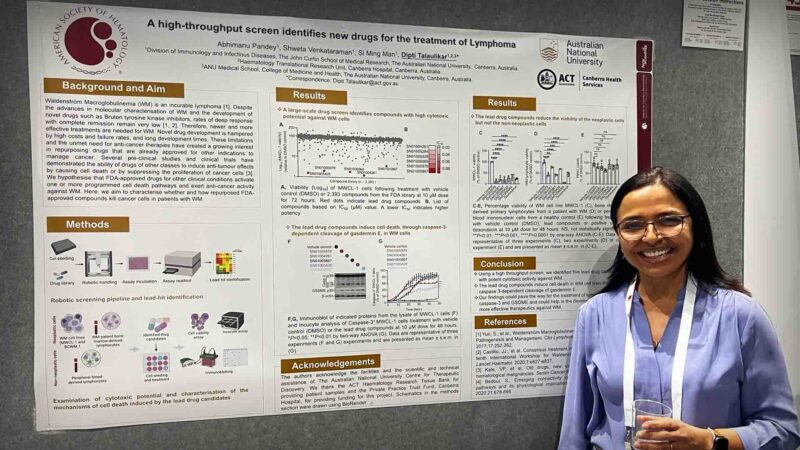
Professor Dipti Talaulikar is a clinical and laboratory haematologist with expertise in genomics, working at Canberra Health Services, and Professor at ANU. She has a clinical and research interest in lymphoma, myeloma and genomics, and has authored close to 100 peer reviewed papers, including several clinical guidelines that have had a significant impact on clinical practice.
-
Engineered proteins to repair or regrow damaged heart muscle cells and tissue
Associate Professor Dan Hesselson leads the Centre for Biomedical AI at the Centenary Institute.
He is an internationally trained research leader in regenerative medicine, focusing on cells and organs affected by heart disease, diabetes and cancer. His work uses insights from the study of basic regenerative processes to identify novel therapeutic targets for these devastating diseases.
-
Causal genes and pathogenic mechanisms underlying gastrointestinal diseases
Professor D’Amato has more than 25 years research experience in the field of human genetics and complex diseases, with activities most recently geared towards a translational application for therapeutic precision in gastroenterology. His team, the Gastrointestinal Genetics Laboratory, combine leading expertise in genomic, computational and pre-clinical research, and have contributed important breakthroughs linking specific genes and pathogenetic mechanisms to a number of gastrointestinal diseases like inflammatory bowel disease (IBD), microscopic colitis (MC) and irritable bowel syndrome (IBS).