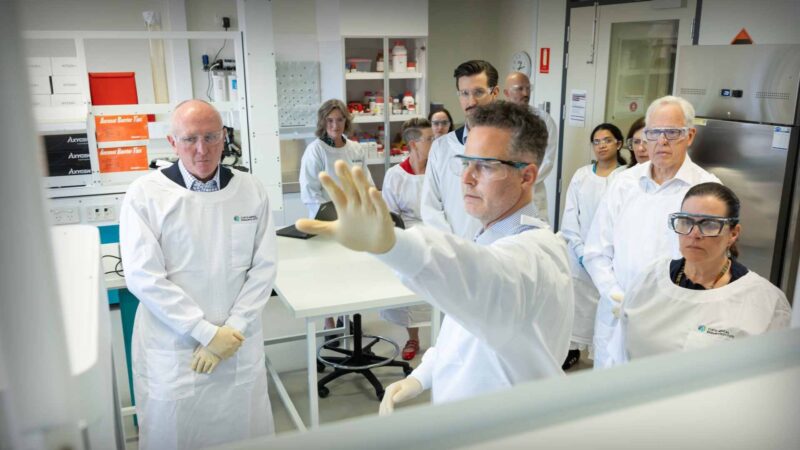
Dr Paul Griffin
Director of Infectious Diseases
Mater Health Services
QUEENSLAND, AUSTRALIA
Watch Dr Paul Griffin talk about research and clinical trials in over 150 infectious disease vaccines for COVID-19, influenza, RSV and others.
You Might also like
-
Radiation therapy techniques and combination treatments for sarcoma
Professor Angela Hong MBBS, MMed, PhD, FRANZCR is a Professor at Sydney Medical School of the University of Sydney. She is a radiation oncologist and has been a member of the Multidisciplinary Bone and Soft Tissue Tumour Clinic at Royal Prince Alfred Hospital/Chris O’Brien Lifehouse for the past 15 years.
As a radiation oncologist located in Sydney, Australia, Professor Hong is focused on treating patients with bone and soft tissue sarcoma. And as a clinician scientist, her research focuses on developing innovative radiation therapy technique and combination treatments to improve the outcome for patients with sarcoma.
-
Therapy to prevent hepatocellular carcinoma in people with liver cirrhosis
Professor John Olynyk is a Gastroenterologist & Hepatologist with over 30 years’ experience, primarily at The Fiona Stanley & Fremantle Hospital Group. He planned the Gastroenterology and Hepatology Service for the Fiona Stanley Hospital and was Head Department from 2010 until 2020.
Professor John Olynyk was appointed as Associate Dean and Head of the Medical Discipline at Curtin University in 2023 until 2025 and is now Associate Director, Clinical Engagement, Curtin Medical Research Institute, Curtin University.
-
Benefits of prehabilitation ahead of surgery
Dr Matthew Wallen PhD, AES, AEP is a Senior Research Fellow in Cancer Survivorship, the Deputy Lead of the Cancer Survivorship Program, and a Senior Lecturer in Exercise Science and Clinical Exercise Physiology within the College of Nursing and Health Sciences at Flinders University, in South Australia. His clinical interest focuses on improving outcomes for people requiring major surgery, specifically (1) lifestyle interventions, including exercise, nutritional, and psychological support to improve the health and wellbeing of people prior to surgery, termed ‘prehabilitation’, (2) novel physical function assessments aimed at identifying people at risk of treatment-related complications, and (3) implementation of new models of care in cancer.