
-
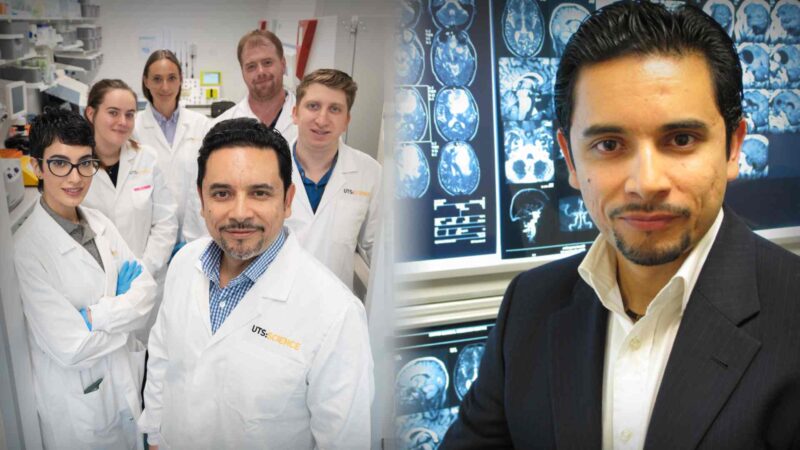
Using human skin hair follicles to treat Alzheimer’s disease
Professor Michael Valenzuela is a science opinion leader, innovator and creative thinker with a career-long commitment to the prevention and treatment of dementia.
Following that he completed graduate medicine and medical training at the Prince of Wales Hospital. In 2012, he established the Regenerative Neuroscience Group at the University of Sydney, and in 2017 became the university’s first Professor of Regenerative Medicine.
Professor Valenzuela’s group discovered a new cell type with potential for regenerative medicine, a rare neural precursor cell found deep within the human hair follicle. He is the main inventor on several related patents and is the Founder and Chief Scientific Officer of Skin2Neuron – a biotech company developing the first neurorestorative cell therapy for Alzheimer’s disease based on this work.
-
In development, age specific clinical practice guidelines for early onset bowel cancer
The National Health and Medical Research Council (NHMRC) has agreed to consider for approval the Clinical Practice Guidelines for the Early Diagnosis and Management of Early-Onset Colorectal Cancer (EOCRC), to be developed by Bowel Cancer Australia in collaboration with the Australian Living Evidence Collaboration (ALEC), and funded by Bowel Cancer Australia. ALEC is led by Cochrane Australia and based in the School of Public Health and Preventive Medicine at Monash University.
-
Awareness, diagnosis and treatment of Congenital Hypothyroidism
Australian Health Journal spoke to Associate Professor MIchelle Jack about congenital hypothyroidism and newborn screening and her concerns in the varying thresholds for across different states in Australia. Despite the existence of newborn screening programs since the 1970s, there is still controversy surrounding the appropriate screening levels. Congenital hypothyroidism, affecting about one in 3500 infants, can lead to severe intellectual and physical impairment if not diagnosed early. The condition is mainly caused by the thyroid gland’s failure to develop properly, resulting in insufficient thyroid hormone production.
Post Views: 965
The desire for primary care nurses to do more, be recognised and valued for the work they do


Recent Segments
- Research, Mentorship and the PhD Experience
- Immune mechanisms of coeliac disease and gluten-related disorders
- National incubator shifts into gear, announcing vaccine and infectious disease innovation cohort
- LIVED EXPERIENCE: severe aortic valve stenosis (aortic stenosis)
- MedTech Industry invited to NSW Parliament House