ADVOCATING FOR AUSTRALIAN CHILDREN LIVING WITH VISION IMPAIRMENT
Australian Childhood Vision Impairment Register
With
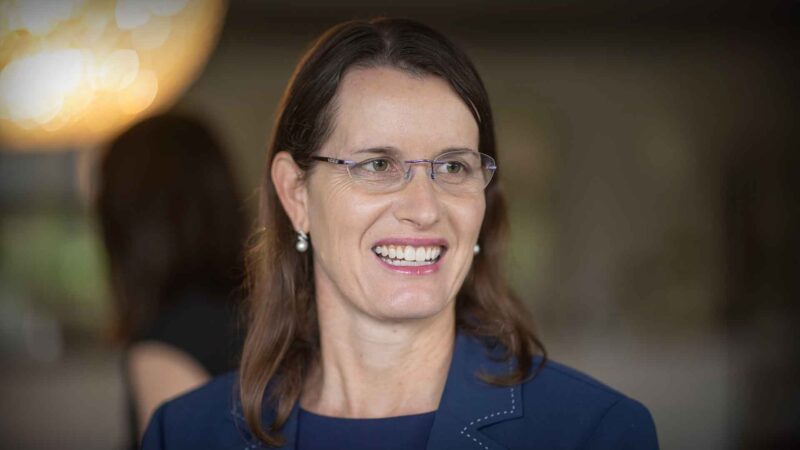
Dr Susan Silveira
Chief Investigator
Australian Childhood Vision Impairment Register, NextSense &
Program Director
Master of Disability Studies (Macquarie University), NextSense
AUSTRALIAN HEALTH JOURNAL SEGMENT
Filmed in Sydney | June 2025
The Australian Childhood Vision Impairment Register (ACVIR), the first of its kind in Australia, captures uniquely Australian data which is used to improve services for children with vision impairment. The data is also available to researchers who work in the area of eye disease and disorders of vision.
Currently in Australia, we don’t know how many Australian children have vision impairment.
This makes it hard to plan for the services these children need, or to argue for research into preventing conditions which cause vision impairment.
NextSense Institute, in partnership with key Australian service providers, corporate donors, government departments and health professionals, has undertaken a major research project to develop and maintain an Australia-wide record of children with vision impairment.
This project is called the Australian Childhood Vision Impairment Register.
Australian Health Journal spoke with Dr Susan Silveira, Chief Investigator of the Register.
The Register collects accurate information on children who have been diagnosed by an ophthalmologist (eye doctor) with vision impairment.. This information is used to establish the number of children with vision impairment, the causes and level of vision impairment and any additional disabilities and health conditions these children have.
The Parent or guardian of a child, aged 0-18 years, who has been diagnosed by an ophthalmologist with vision impairment, are invited to join the Australian Childhood Vision Impairment Register.
The Australian Childhood Vision Impairment Register (ACVIR) is sponsored by NextSense with support from Guide Dogs, Vision Australia, low vision service providers and families of children with vision loss.
Source: Written by AUDIENCED sourced from NextSense website
You Might also like
-
Continuing education program leads to better conversations
Medicines Australia’s Continuing Education Program (CEP) is designed to educate medical representatives to a recognised industry standard. Dr Tristan Ling, CEP Academic Lead and Project Manager at the College of Health and Medicine, University of Tasmania talks about the 900 students that come through the program each year.
The CEP is primarily directed at medical representatives working within the prescription medicines industry, but is also recommended to people who may not be currently employed within the industry but would like to pursue a career as a medical representative. It is also available to personnel working for organisations interacting with the pharmaceutical industry.
-
Clinical research integrates with GP and Pharmacist workflows to supplement practice revenue
Clinical trials are crucial to the development of evidence-based preventative medicines. In addition, participation in clinical trials can also provide patients with opportunities to access new treatments.
“Clinical trials are at the heart of medical advances which look into new ways to treat, prevent, or detect disease. Volunteers often do so to help contribute to advancing scientific research, knowing that they are participating in the hope of helping future generations,” said Charlotte Bradshaw, CEO and Founder to Evrima Technologies.
-
Paramedics seek team-based primary health care pilots
The Chief Executive Officer of The Australasian College of Paramedicine, John Bruning spoke with Australian Health Journal about the following:
New models of care proposed for paramedics
Paramedicine pilot program in the pre-budget submission
Scope of how paramedics can support General Practice, and guidelines on safety and quality
Current limitations experienced by paramedics needing to be addressed by Government
Other health priorities hopefully addressed in Federal Budget.In the lead up to the Australian Federal Budget in May 2023, Australian Health Journal reached out to peak health industry bodies to hear about their priorities, either noted in pre-budget submissions lodged with Federal Government in January 2023 or in recent forums such as the Strengthening Medicare Taskforce.