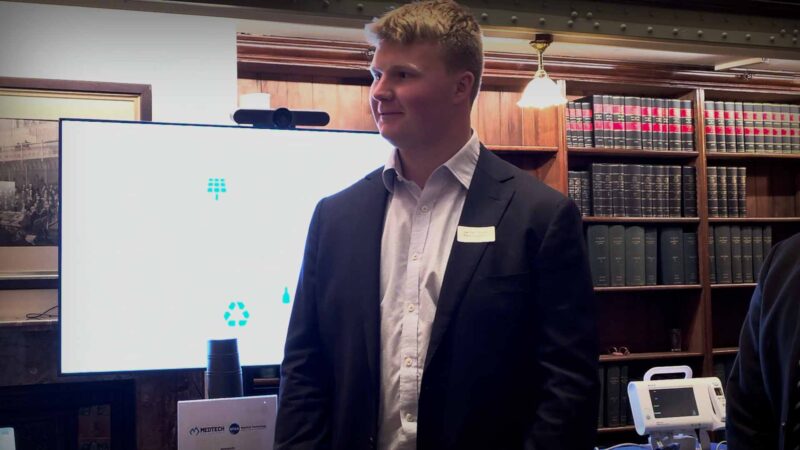
NATIONAL INCUBATOR SHIFTS INTO GEAR, ANNOUNCING VACCINE AND INFECTIOUS DISEASE INNOVATION COHORT Six Australian infectious disease innovations receive $10.48 million to accelerate commercialisation potential
With
Jenny Herz,
Co-Founder and Executive Director
Biointelect
Danielle Shand,
General Manager
Biointelect Venturer
SEGMENT
Filmed in Sydney | September 2026
Biointelect Venturer is Australia’s national incubator for infectious disease innovation, helping promising Australian scientific innovators accelerate their path from discovery to impact. Funded by the Australian Government’s Medical Research Future Fund (MRFF) through the 2024 BioMedTech Incubator grant opportunity, Biointelect Venturer combines catalytic non-dilutive funding with commercialisation expertise, strategic guidance, networks and tailored support to progress early-stage innovations towards commercial and investment readiness. Managed and operated by Biointelect, the incubator builds on Biointelect’s deep expertise and success in supporting early-stage biotech and medtech commercialisation.
Biointelect Venturer has announced six Australian infectious disease innovations will share $10.48 million in the incubator’s first funding round giving the successful research teams the ability to advance their early-stage breakthroughs to commercial and investment readiness.
– AdaptiVax Pty Ltd
– Ebivanta Therapeutics Pty Ltd
– ENA Respiratory Pty Ltd
– Proboxis Biotechnology Pty Ltd
– Saccharide Therapeutics Pty Ltd
– SAMMvax Pty Ltd
The recipients address significant local and global unmet health needs in infectious disease and include three vaccine offerings, a unique nasal antiviral technology and two vaccine platform technologies.
The projects will now enter the Biointelect Venturer incubation program for up to two years and receive non-dilutive funding, tailored commercialisation support, expert mentoring and access to national and international networks to help progress their technologies to secure commercial interest and funding.
Biointelect Venturer was established through a $32.9 million Medical Research Future Fund (MRFF) grant from the Australian Government’s MRFF Medical Research Commercialisation initiative. It will support two national cohort intakes, this being the first, and a dedicated top-up round for high-potential projects as part of the program.
Biointelect Venturer is helping to build local capability in translational research and commercialisation and supporting the creation and growth of Australian biotech companies developing health technologies across the infectious disease sector. Ultimately the ambition is to strengthen Australia’s position as a global infectious disease innovation hub.
Source: Adapted from Biointelect media release (August 2026)
You Might also like
-
LIVED EXPERIENCE: Complex Regional Pain Syndrome (CRPS)
Lachlan Thorpe has shared his experience of living with complex regional pain syndrome (CRPS), highlighting the profound impact the condition had on his life and the difference medical technology has made to his recovery.
In an interview with the Australian Health Journal, Thorpe explained that his CRPS developed following an ankle injury sustained while playing rugby for Sydney University Rugby Club in late 2024. After undergoing surgery and rehabilitation for the injury, he began experiencing severe pain, swelling and sensitivity despite there being no further orthopaedic damage.
-
The world of AI avatars in dementia care
Dementia care is one of the critical issues facing the aged care industry. About 500,000 Australians currently live with the brain disorder condition, and this is tipped to rise to 1.1 million in a generation.
How to effectively provide quality care for people living with dementia was a key element of the royal commission into aged care, which found the complex care required was an ongoing challenge for the industry.
-
Achieving impact in Occupational Therapy
Associate Professor Emma George is a leader in occupational therapy, fascinated by the role and importance of occupation as a right for health and well-being. Her research projects all explore the way we address health inequities among marginalised people and communities with a commitment to social and occupational justice.