CLOSING THE DIAGNOSTIC GAP IN OVARIAN CANCER DETECTION
With
Associate Professor Michelle Hill
Founder and CEO
ProSeek bio
PEOPLE IN HEALTH CARE SEGMENT
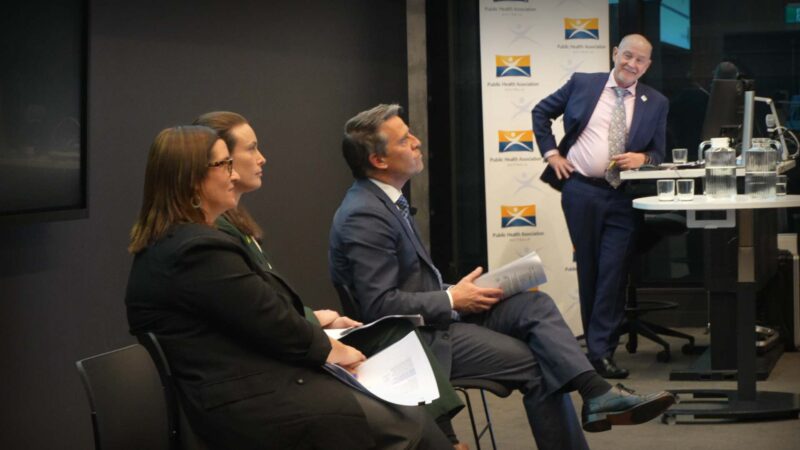
Filmed in Brisbane & Sydney | May 2026
After 15 years in academia, Associate Professor Michelle Hill founded ProSeek bio to address one of the most urgent challenges in women’s health: closing the diagnostic gap in ovarian cancer.
For too long, women suspected of ovarian cancer have faced an impossible choice — undergo invasive surgery for diagnosis, only for up to 80% of those procedures to reveal no cancer, or delay intervention and risk diagnosis at a later stage when treatment options are fewer and survival outcomes are significantly worse.
ProSeek bio is developing a non-invasive blood test designed to help clinicians determine whether surgery is truly necessary. Using advanced glycoproteomics to detect ovarian cancer biomarkers in blood, the technology is being developed to deliver more precise diagnostic insights through blood sample processed in existing pathology laboratories.
The goal is clear: enable earlier diagnosis, reduce unnecessary surgeries, lower healthcare costs and improve survival outcomes for women.
Ovarian cancer remains the most lethal women’s cancer because symptoms are often vague, common and easily overlooked. Bloating, pelvic pain and unexplained weight changes are frequently dismissed, contributing to delayed diagnosis in more than 70% of cases. Yet when ovarian cancer is detected early, more than 90% of women survive at least five years. When diagnosed late, survival drops dramatically.
ProSeek bio was founded to change that reality.
Built on more than a decade of biomarker research, the company is translating academic discovery into a clinical diagnostic tool with the potential to transform how ovarian cancer is detected and managed.
By giving clinicians a faster, safer and less invasive way to assess risk, Assoc Prof Hilll talks about how ProSeek bio is working to change the diagnostic pathway for ovarian cancer — reducing harm, improving decision-making and helping save women’s lives.
Source: Adapted from transcript
Event Credit: Medical Technology Association of Australia (MTAA)
Ovarian cancer statistics credit: Ovarian Cancer Research Foundation (OCRF)
You Might also like
-
A clinical research career working Sponsor-side, CRO-side to Site-side
In July 2025, Paratus Clinical, a Australian provider of dedicated clinical trial services, announced the appointment of Megan Morrison as its new Chief Executive Officer, at the same time as a significant milestone as the company celebrating over a decade of impact in the clinical research space. Paratus now operates a network of five purpose-built, research-only clinics along Australia’s eastern seaboard.
-
Metabolic health expert talks about healthy ageing
David Beard is a highly experienced Exercise Physiologist with a specialisation in metabolic health and healthy aging. He has spent over 40 years in this profession, even before exercise physiology was formally recognised as a discipline. His extensive background includes over a decade of working in aged care and a strong focus on adult health and fitness. David has authored a book on healthy aging and dedicated the last 10 to 12 years to advancing his expertise in metabolic health issues such as diabetes, weight loss, and inflammatory conditions. He is a co-owner of HFRC in Nedlands, Western Australia, where he has worked for nearly a decade.
-
World first in rural and remote nursing
In March 2023, the Australian Government released the National Rural and Remote Nursing Generalist Framework 2023–2027. The Framework is a world first and describes the unique context of practice and core capabilities for rural and remote Registered Nurses in Australia.
The Framework was developed by the Office of the National Rural Health Commissioner and Australian Health Journal spoke with National Rural Health Commissioner, Adjunct Professor Ruth Stewart, and Deputy National Rural Health Commissioner – Nursing and Midwifery, Adjunct Professor Shelley Nowlan, on the importance of rural and remote nursing and of the Framework itself.