
-
The role of genomic screening in transforming public health
Dr Jane Tiller is a lawyer, genetic counsellor and public health researcher. She is Ethical, Legal & Social Adviser in Public Health Genomics at Monash University, and a National Health and Medical Research Council Investigator Grant holder. Jane is passionate about the use of genomics to prevent disease, and in delivering equitable access to preventive genetic information at the population level. She is co-lead of DNA Screen, a world-first study piloting the offer of preventive DNA screening to the Australian adult population. DNA Screen has tested over 10,000 young people for genetic high risk of medically actionable conditions such as cancer and heart disease, finding about 2% of participants had genetic high risk. Jane is leading efforts to secure Commonwealth Government funding to expand the DNA Screen program, with the eventual goal of the development of a public health population screening program for disease prevention based on high genetic risk.
-
Recognising service in health regulation
In April 2023, Professor John Skerritt retired from his position of Deputy Secretary Health Products Regulation Group, a role he has been in since 2012. During his time at the TGA he had line responsibility for over 1200 staff involved in the regulation of therapeutic goods, regulation of gene technology and industrial chemicals and control of drug import, export and production.
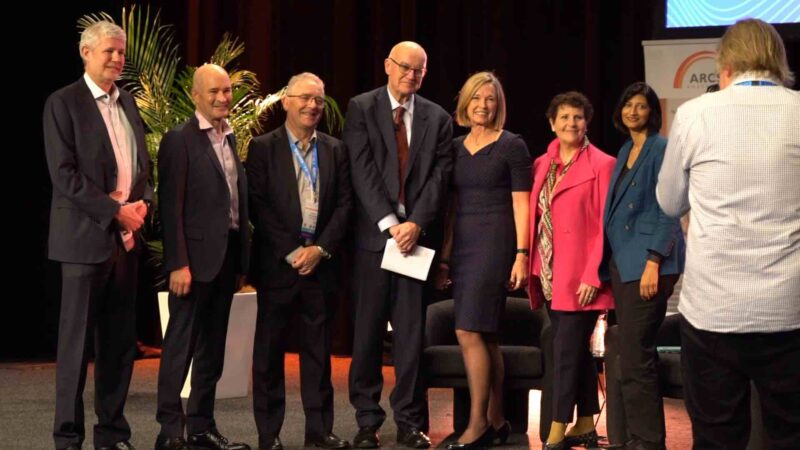
At this year’s ARCS 2023 Conference, ARCS Australia CEO Dr Shanny Dyer paid tribute to Professor Skerritt and his service to the Australian health industry. She led a tribute with fellow industry heads, Elizabeth de Somer, CEO, Medicines Australia, Anne Harris, Managing Director, Pfizer Australia & New Zealand, Deon Schoombie, CEO, Consumer Healthcare Products Australia, Ian Burgess, CEO, Medical Technology Association of Australia and Arthur Brandwood, President ARCS Australia.
-
Generosity of spirit in teaching
The Ramaciotti Medal for Excellence is considered one of the most prestigious awards in biomedical research in Australia and is highly sought after by researchers in the field.
In 2022, Professor Matthew Kiernan was the recipient of the Ramaciotti Medal for Excellence and the associated $50,000 award.
Australian Health Journal spoke with Professor Kiernan to hear about his journey in medicine and science to try and uncover and understand diseases and his generosity of spirit to pass on what he has learnt.
Post Views: 21
Alarming move away from plants based foods and reduced variety in diets


Recent Segments
- Alarming move away from plants based foods and reduced variety in diets
- Identifying biomarkers for immunotherapy using spatial biology
- Vascular cognitive impairment and dementia
- Medical device regulations evolve for Australian innovators with European ambitions
- NSW political candidates outline policy priorities in Great Health Debate