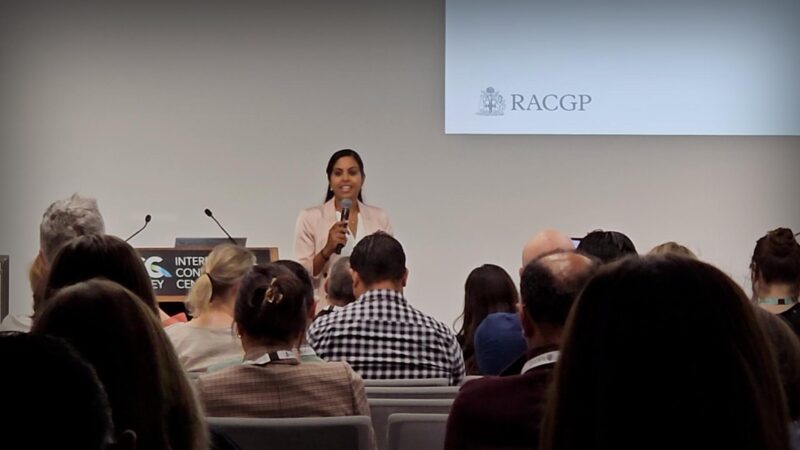
POPULATION SCREENING FOR CHRONIC DISEASE MAXIMISING BENEFITS, MINIMISING HARMS Public Health Association of Australia (PHAA) hold conference on current and future advances in population screening
With
Adjunct Professor Terry Slevin, Chief Executive Officer
Public Health Association of Australia
Australian Health Journal Segment
Filmed in Sydney | March 2025
Population screening is an important contributor to advancing health outcomes through the early detection of and successful intervention for chronic disease. The evolution of science, technology and evidence relating to diseases which are or may be amenable to a population screening approach deserve broad discussion and the sharing of expertise and evidence. They also warrant close scrutiny in context of health policy and health resource allocation considerations.
There are established (and proposed) screening programs relevant to a range of diseases, notably breast, cervix, bowel cancer, and more recently for skin and lung cancer screening. There are a number of other chronic diseases where as new technologies are emerging and evidence is being gathered to support organised screening, (including but not limited to diabetes, CKD, MAFLD as well as cardiovascular and other risk assessment for primary prevention in general practice.
Population-based criteria for screening, based on WHO criteria and the Australian Population Based Screening Framework, aim to ensure that the benefits of screening outweigh and minimise any potential harms. These criteria are well understood by those involved in established screening programs and advocates for emerging screening programs are keen to learn from past experience how to compile evidence, design, implement and monitor programs, as well as ensure equitable participation. Similarly, there is much to learn from emerging programs and new technologies for those involved in established programs where adopting advances in evidence and technology can be challenging and perceived as slower.
In March, Public Health Association of Australia (PHAA) convened Screening Conference Conference 2025 with the theme of ‘Population Screening for Chronic Disease – Maximising Benefits, Minimising Harms’.
The conference provided opportunities for attendees to exchange information on population screening and learn from each other’s experience, across a range of disciplines. Those in attendance and presenting came from research, society, Government, program delivery, policy, consumers and clinicians.
Source: Adapted from Screening 2025 Conference website (PHAA operated)
You Might also like
-
From paediatric nursing to leadership & private hospital general management
With over 20 years of experience in the Australian and international healthcare sectors, Georgia Banks is a dedicated and results-driven health professional with a proven track record in clinical, financial, human resources, and strategic management. Passionate about delivering high-quality patient care, Georgia possesses an authentic leadership style that fosters engagement, collaboration, and continuous improvement.
Currently serving as General Manager at Hobart Private Hospital within Healthscope, Georgia has been instrumental in driving operational excellence, enhancing patient experience, and supporting staff development. Her leadership has played a key role in aligning hospital services with strategic priorities while fostering a culture of accountability and innovation.
-
National Cancer Plan activates Australian Comprehensive Cancer Network
The landscape of cancer care in Australia is set to transform with the Australian Government launch in May 2024 of the Australian Comprehensive Cancer Network (ACCN) at the Innovations Showcase event, hosted by Cancer Australia in Sydney, Australia.
The ACCN is a nationally integrated system of cancer care, aimed at enhancing patient experiences and outcomes through coordinated and equitable access, by linking to comprehensive cancer services across Australia. Anchored by Comprehensive Cancer Centres (CCCs), the ACCN strives to deliver evidence-driven prevention, diagnosis, treatment, and support to all Australians affected by cancer.
-
Empowering underprivileged communities with sustainable health
Dr Gaj Panagoda, CEO of Xstitch Health, has a diverse medical background and is working to improve health systems for underprivileged communities. In the Australian Health Journal’s People In Health Care series, he talks about the changes needed in community-based care using a project based approach,
According to Dr Panagoda, there is a need for a shift towards community-based care and collaboration with stakeholders in the healthcare system, and the potential to create a new kind of socially conscious, inspired, community-informed medical specialist is the future of medical specialty care.