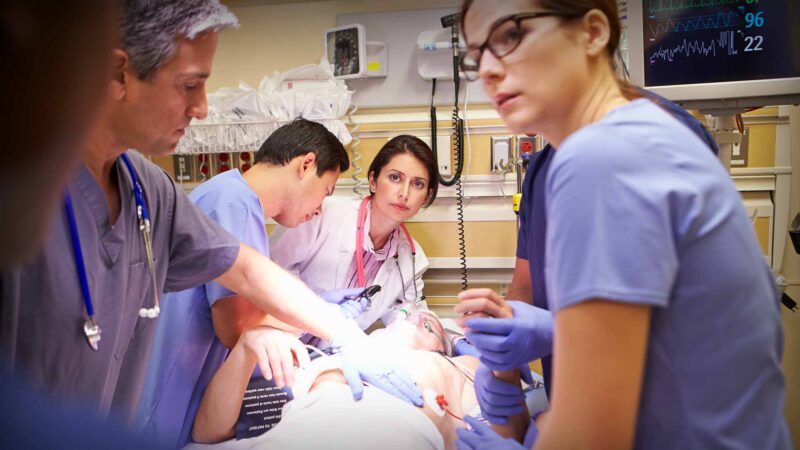
A Deloitte study on General Practices in 2019 predicted an increase in unmet medical needs and a decrease in the medical workforce. The study discussed new models of care with interdisciplinary team care including nurse practitioners and community paramedics. Australian Health Journal spoke with the Australasian College of Paramedicine on the role paramedics can play aside from delivering emergency care in transit.
John Bruning is the CEO of the Australasian College of Paramedicine, which has been representing the paramedicine profession in Australia and New Zealand for more than 50 years. According to John, there have been exciting developments in the paramedicine and health fields the past year.
The scope of practice review, as well as the Federal Government’s efforts to improve patient outcomes through multidisciplinary team care, have been particularly noteworthy. While paramedics have traditionally been associated with emergency response and ambulance services, the review has highlighted the potential for them to play a significant role in supporting the healthcare of local communities.
Bruning points out paramedics have the opportunity to play a key role in supporting healthcare and improving patient outcomes. Paramedics should be utilised more widely in urgent care clinics to improve patient outcomes as they are experts in urgent, acute, unplanned care.
Despite being seen primarily as emergency responders, paramedics have long been providing care in the primary care space. As such, their increased involvement in primary and urgent care is a natural progression that can lead to improved health outcomes for communities. Urgent care clinics, which treat non-life-threatening injuries and illnesses, have been a recent introduction. However, when these clinics were initially proposed, paramedics were left out of the opportunity, despite being experts in urgent, acute, unplanned, and unscheduled care. They work in these types of situations every day in the ambulance service and should be utilised in these clinics to improve patient outcomes. Working as part of multidisciplinary teams with doctors and nurses can further enhance the outcomes for local communities.
Discussing with Australian Health Journal, Michelle Murphy, the Advocacy and Government Relations Lead for the Australasian College of Paramedicine, says that having a sustainable health workforce is essential for improving access to healthcare. Paramedicine is currently the fastest-growing health workforce, growing at 9% per annum for the last four years. Urgent care clinics are filling the gap between family or primary care and tertiary or hospital-based care and reducing the pressure on emergency departments and ambulances. Paramedics are well-placed to work in these clinics, delivering ad hoc unplanned clinical care when it is urgent but not an emergency. Multidisciplinary teams improve access to care by enabling communities to think about the health providers they need and bringing together different providers to work together to deliver care in communities.
Murphy references a study involving Associate Professor John Adie at the University of the Sunshine Coast. As Assoc Professor of Urgent Care, Prof Adie talks about the workforce of General Practitioners at the time predicted to decrease by 25% from 2019 to 2023, while the unmet need was expected to increase by 38%. Some countries are adopting new models that involve nurse practitioners and community paramedics as part of the workforce. These practitioners will be able to assist GPs in seeing patients with non-life-threatening urgent conditions.
You Might also like
-
Empowered nurses leading digital health enablement
Nurses have a pivotal role to play in the widespread implementation and adoption of digital health technologies throughout the healthcare sector for the primary purpose of improving safety and quality of patient care.
Australian Health Journal talked to two of Australian top leaders in nursing and in digital health on how the role of nursing is pivotal to the success of digital health in the Australian health system.
-
Research finds many practitioners feel underprepared to navigate men’s distress
Movember’s Men in Mind expands nationally to equip mental health professionals with the tools to better connect with men before they reach crisis point. Research conducted by the Men’s Health Research team at Movember has found men account for three in every four suicide deaths in Australia, and more than 50% had sought help in the year before they died.
-
Clinical trial site in primary care setting open for novel therapies in psychiatry
Over the past decade, Paratus has been involved in over 200 clinical trials across 4 clinical site locations. Now a fifth site, the newly opened Melbourne site will cater to both primary care and psychiatry, specifically designed for psychedelic studies.
The new Melbourne site will be a focused on primary care studies specifically expanding access to psychiatric research, a growing area of unmet need. Australian Health Journal met with 3 recent hires brought in to support clinical trials across the organisation and in psychiatry in Melbourne.