
-
Supportive care for people living with or beyond cancer treatment
Dr Hannah Wardill is a Hospital Research Foundation Fellow and lead of the Supportive Oncology Research Group (SORG), in the School of Biomedicine, University of Adelaide and Precision Cancer Medicine Theme, South Australian Health and Medical Research Institute (SAHMRI). She is an Executive Board Member of the Multinational Association for Supportive Care in Cancer / International Society for Oral Oncology (MASCC/ISOO) and Chair of both MASCC/ISOO Patient Partnership Committee & the Palliative Care Clinical Studies Collaborative (PaCCSC) Cancer Symptom Trials (Gut Dysfunction Node; supported by Cancer Australia).
-
Lymphoma, Myeloma and Genomics
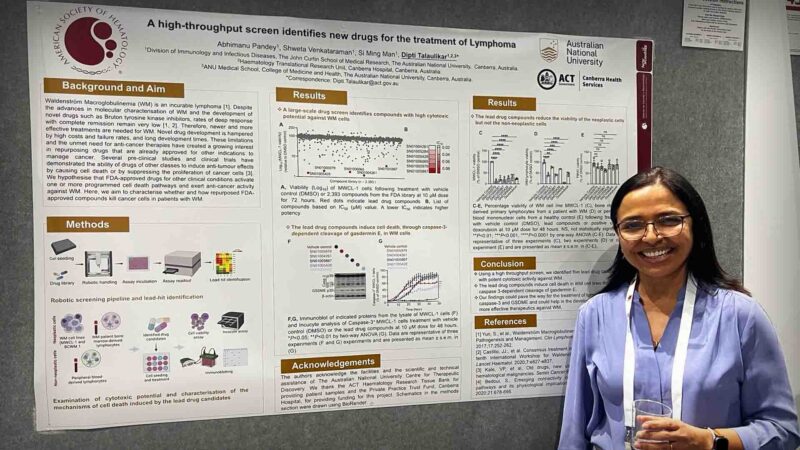
Professor Dipti Talaulikar is a clinical and laboratory haematologist with expertise in genomics, working at Canberra Health Services, and Professor at ANU. She has a clinical and research interest in lymphoma, myeloma and genomics, and has authored close to 100 peer reviewed papers, including several clinical guidelines that have had a significant impact on clinical practice.
-
CASE STUDY Next Generation Condom Contraception
Eudaemon Technologies, an early-stage medtech company with a focus on sexual reproductive health, is developing a hydrogel condom to address the need for a better feeling, next generation condom, with the potential to improve user experience and address issues with traditional latex condoms.
“Over 1 million STI’s being diagnosed every day and up to 120 million unplanned pregnancies every year result in a $60 billion health burden across the globe”, says Co-Founder and Executive Director of Operations, Dr Simon Cook.
Formed in 2018, the company focuses on developing tough hydrogels as an alternative to address issues with odour, colour, and taste commonly associated with latex condoms. This technology can be loaded with small molecule drugs for flavours or anti-STI compounds, and was developed in response to a grant from the Bill and Melinda Gates Foundation to address unplanned pregnancies and STIs.
Post Views: 277
Engineered proteins to repair or regrow damaged heart muscle cells and tissue


Recent Segments
- Research Australia Awards celebrate researchers in life-changing science and discovery
- Connecting Students with Careers in MedTech
- HEALTH CARE BRIEF: Shingles (Herpes Zoster)
- Large-scale clinical and population-based research
- Avoiding lung complications after surgery by reversing muscle relaxant drugs more effectively