NEW REIMAGINED IDENTITY LIFESCIENCES AUSTRALIA REPOSITIONS FOR SECTOR Commences new initiatives in Company Directors training, Standards push and support for Early Career Stage workforce
With
Dr Tim Boyle PhD ChMPP,
Chief Executive Officer
LifeSciences Australia (formerly called ARCS Australia)
SEGMENT
Filmed in Sydney | June 2026
In June 2026, ARCS Australia formally became LifeSciences Australia — a name chosen to reflect the role the organisation plays across Australia’s life sciences sector.
Over more than 40 years, ARCS has grown well beyond its origins as a training and education body for regulatory and clinical specialists. Today, the organisation supports professionals across the entire life sciences sector — from early research through regulation, development and commercialisation — through an expanding range of programs and initiatives.
Following extensive member and stakeholder consultation throughout 2025 the name change was decided aiming to be a clearer, more inclusive identity reflecting the full breadth of Australia’s life sciences workforce and its role as the sector’s professional peak body.
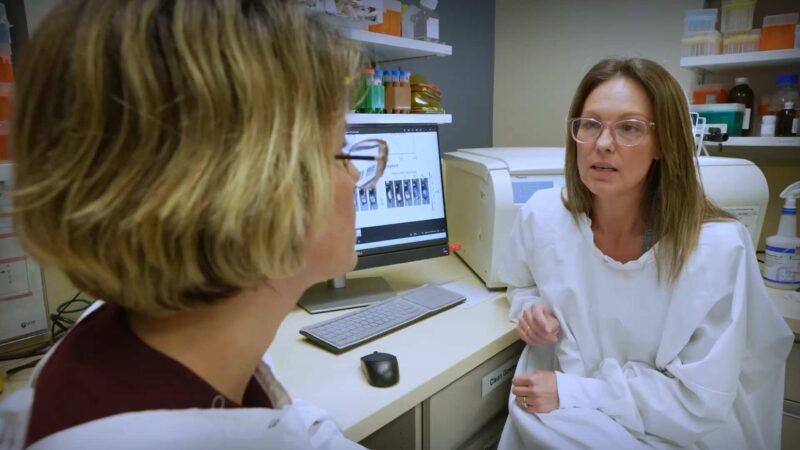
Australian Health Journal was invited to the 2026 ARCS Conference in Sydney and met with Dr Tim Boyle Chief Executive Officer, LifeSciences Australia.
Source: Adapted from the ARCS Australia website
You Might also like
-
CASE STUDY: Creating awareness, workforce education & dissemination strategy in national screening
At the recent Screening Conference 2025 in Sydney, hosted by Public Health Association, Dr Rachael Dodd, Senior Research Fellow at The Daffodil Centre, spoke about the information and educational resources created to increase awareness in the healthcare workforce and community on the upcoming Australia’s National Lung Cancer Screening Program commencing in July 2025.
-
Taiwanese health and research delegation visit Paratus clinical trial site in Canberra
In late August 2025, a Taiwanese delegation comprising government officials from the Taiwanese FDA, various governmental groups, and physicians and researchers from across Taiwan, visited Paratus Clinical’s trial site in Canberra. Their objective was to explore both the differences and similarities between the clinical research ecosystems of Taiwan and Australia.
-
Surgical Site Infection (SSI) Synopsis, including modifiable and non-modifiable risk factors
Talking to the Australian Health Journal, Professor Russo states there is a particular concern in joint operations, such as hip or knee replacements, as infections in these areas can have severe consequences, including the removal of the infected joint, prolonged treatment, and significant costs for both hospitals and patients. Despite the substantial impact of surgical site infections, Australia lacks a national surveillance program for these infections, making it challenging to obtain accurate data. However, an estimate suggests that around 45,000 surgical site infections occur annually in Australia, resulting in approximately 900 deaths.